
Loading...
Serving Abilene, TX and surrounding areas(325) 283-1586
Abilene Insulation Company serves Stamford, TX with air sealing and insulation services for the older ranch homes and rural properties of Jones and Haskell counties. Stamford sits 41 miles north of Abilene on the open Rolling Plains, where persistent southwest wind and seasonal dust events expose every gap in a building envelope. We respond to all Stamford inquiries within one business day and have been serving the area since 2022, with TDLR-documented work on every project.
Matched to the older rural housing stock of Stamford and Jones County, and to the demanding thermal and wind conditions of the West Texas Rolling Plains.
Stamford's position on the open Rolling Plains means homes face persistent wind pressure against the building envelope year-round. Any gap in the ceiling plane, around window rough openings, or at the foundation sill plate is a pathway for outdoor air to enter and conditioned air to leave. Professional air sealing closes those pathways systematically, starting with a blower door test that measures existing leakage and identifies priority locations. In Stamford homes built before the 1980s, attic top-plate penetrations and recessed light cans are consistently the biggest sources of air exchange between the living space and the hot attic above it.
Stamford's summers push well past 100°F, and the low-pitch ranch roofs common in this area of Jones County trap heat at the deck level before it can dissipate. The IECC Climate Zone 3 minimum of R-38 at the attic floor is the point at which insulation actually performs its function in this climate, not a stretch goal. Most Stamford homes built before 2001 have original insulation well below that level. Blown-in cellulose or fiberglass installs over existing material in a single day without disturbing ceilings.
Blown-in insulation is the standard upgrade path for Stamford attics because it fills the irregular framing cavities and tight eave areas that batts cannot cover. For homes where the original insulation has settled, shifted, or been disturbed over decades of temperature cycling, blown-in over the existing floor brings the entire attic to a uniform target depth. Combined with attic air sealing, this is the single improvement that delivers the largest energy return for the cost in a hot-dry climate.
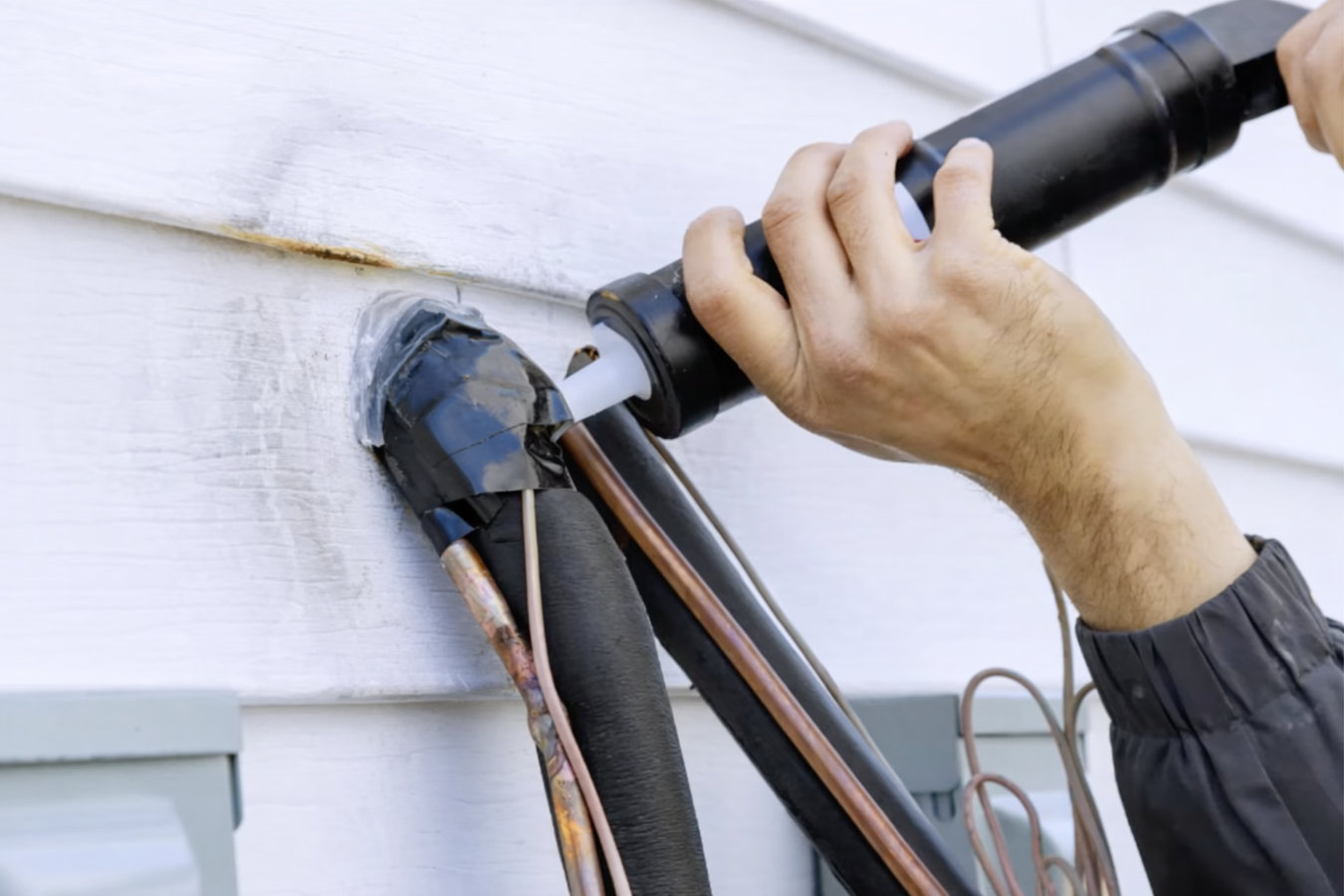
Sealing the attic before adding insulation is not optional in Stamford homes — it is the step that determines whether the insulation performs as rated. A layer of blown-in fiberglass over open top-plate penetrations is like insulating through a sieve. Attic air sealing uses caulk and expanding foam to close gaps around every plumbing chase, electrical penetration, recessed light can, and attic hatch perimeter before insulation material goes down. It is a half-day scope that makes the rest of the project work.
Stamford's 100% rural classification in Census geography reflects a housing stock of individual homes — no attached townhomes, no multi-family density — each managing its own heating and cooling load independently. A whole-home insulation assessment covers the attic, walls, and any crawl space or floor assemblies, prioritizing work by return on investment and the specific conditions found at each property. Rural Jones County properties often have the most to gain from comprehensive insulation work because deferred maintenance is more common in areas with limited contractor access.
Stamford homes built in the 1940s through 1970s were constructed without any minimum insulation requirement — Texas did not adopt a statewide residential energy code until 2001. Retrofit insulation brings those homes closer to current performance standards without opening walls or ceilings. Dense-pack blown-in fills empty or under-insulated wall cavities through small access holes that are patched before the crew leaves. The result is a measurable reduction in both heating and cooling costs without the disruption of a renovation.
Stamford is a compact rural community of about 2,907 people on the border of Jones and Haskell counties, classified as 100% rural by the U.S. Census. It sits 41 miles north of Abilene and is part of the Abilene metropolitan statistical area, but its character is that of an independent West Texas ranch community rather than a suburb. The city's housing stock reflects that identity: predominantly single-story ranch homes and older farmhouses on generous lots, with minimal multi-family construction.
The Rolling Plains geography that surrounds Stamford is the defining factor for insulation work here. The terrain is open, gently undulating rangeland with minimal tree cover and no natural windbreak to slow the prevailing southwest winds. Those winds carry fine dust from the broader Permian Basin region and drive sustained air pressure against building envelopes continuously. An older Stamford home with unsealed top-plate penetrations and deteriorated weatherstripping is fighting a losing battle against both heat gain in summer and heat loss in the periodic hard freezes that push down from the north in January and February.
Texas adopted its first statewide residential energy code in 2001. The majority of Stamford's existing housing was built before that date, meaning it was constructed without a mandated minimum R-value at the attic floor, without air barrier requirements, and without the envelope integrity standards that modern construction takes for granted. The gap between what those homes have and what current Climate Zone 3 standards call for is significant, and it shows up directly on monthly energy bills.
Stamford also has a meaningful number of rural county road properties — ranch houses, caretaker residences, and seasonal-use structures on acreage — where insulation has been deferred indefinitely. These properties often have the most severe envelope deficits of anything we encounter in this part of Texas, and they benefit proportionally more from a comprehensive air-seal-and-insulate project than any in-town home would.
We handle permitting for Stamford jobs through the City of Stamford, whose main offices are on Swenson Avenue — the street named for the Swenson ranching family that founded the city in 1900. The City of Stamford handles permit applications directly; for rural Jones County properties outside the city limits, we coordinate with the county as needed. One consistent characteristic of Stamford homes that informs how we plan attic jobs: the low-slope roof lines on ranch-style construction here create tight attic clearances near the eaves, where insulation baffles must be set correctly or blown-in material blocks soffit vents and creates moisture problems in the roof assembly. We set baffles before every blow-in. Skipping that step produces problems six months later that cost more to fix than the baffles did to install.
Reaching Stamford from our Abilene base means heading north on US-277, about 41 miles through open ranch country. The same highway connects us south to Anson in Jones County, where the housing profile is similar. Swenson Avenue runs through Stamford's historic downtown, and the residential streets off it — particularly those near the Stamford Carnegie Library, one of only four still operating in Texas — include some of the oldest housing in the city. Those blocks are where we most commonly find the open top-plate penetrations and minimal original wall insulation that characterize pre-code construction in this region.
Lake Stamford, about 10 miles east of town on Paint Creek, is the city's water supply reservoir and a regular recreation destination for Jones County residents. We serve several properties in the area around the lake, including some older fishing cabins and weekend homes that have significant envelope work needed. That type of seasonal-use construction was often built quickly with minimal insulation, and it shows in the comfort and energy bills of owners who use the properties year-round.
Call or submit the estimate form. We respond to Stamford and Jones County inquiries within one business day. For calls during business hours we typically reply the same day and can usually schedule an on-site visit within the following week.
A crew member comes to the property and runs a blower door test to measure your home's existing air leakage rate in ACH50. That number, combined with a physical inspection of the attic and accessible envelope details, identifies exactly which locations to seal first and what insulation upgrades will deliver the largest return. The visit is free with no obligation.
You receive a written estimate that includes your starting ACH50 reading, the specific sealing scope, material selections, and any insulation work recommended. If a City of Stamford or Jones County permit is required, we handle the submission. Cost is confirmed in writing before any work begins.
After sealing and insulation are complete, a final blower door test confirms the measured improvement. A Texas TDLR certification is posted in the attic documenting the insulation type, installed depth, and R-value achieved. You receive the before-and-after ACH50 readings as a written record you can use for tax credit claims or home sale disclosure.
We respond to Stamford and Jones County inquiries within one business day. The on-site visit is free and carries no obligation. After you reach out, we confirm a visit time, run a blower door diagnostic, and give you a written quote with before measurements before any work begins.
(325) 283-1586Stamford was established in 1900 when the Swenson brothers — sons of S.M. Swenson, the first Swedish immigrant to settle in Texas — persuaded the Texas Central Railroad to extend a line through their landholdings. They donated the original 640-acre townsite, and the city's main street still carries the family name: Swenson Avenue. The Swenson Land and Cattle Company, whose holdings once spanned nearly 500,000 acres across 12 Texas counties, remains headquartered in Stamford to this day — one of the few places in West Texas where a ranching dynasty from the 1800s is still operating from its original base.
Stamford is best known nationally as the permanent home of the Texas Cowboy Reunion, held every July 4th weekend since 1930. Unlike professional rodeo circuits, the reunion is organized for working ranch cowboys — not career athletes — and draws visitors from across the country to watch events that preserve traditional cowboy competition formats. By 1937, attendance had grown to more than 70,000, and the event is credited with standardizing rodeo contest formats that are now used across the country. That heritage is central to how Stamford residents identify their community.
The residential character of Stamford is shaped by its 100% rural Census classification and its small, stable population of around 2,900. Single-story ranch-style homes are the dominant housing type, most built between the 1940s and 1970s along the grid streets radiating from the historic downtown. The Stamford Carnegie Library, one of only four Carnegie libraries still operating as a public library in Texas, sits in downtown and represents the civic investment Stamford made during its most prosperous early growth years. Lake Stamford, a 5,124-acre reservoir on Paint Creek about 10 miles east of town, serves as the municipal water supply and a fishing and boating destination for the wider Jones County area.
We serve the full range of Stamford-area property types, from the in-town homes on the streets near Swenson Avenue to rural ranch properties and the older lake-area cabins along Paint Creek. Homeowners in Anson to the south and the communities along US-277 face the same housing ages and open-plains wind conditions, and we serve those areas on the same routes. The Texas Cowboy Reunion's July 4th timing is also a reliable signal: whatever insulation work Stamford homeowners have been putting off through the spring, the full heat of the Rolling Plains summer is about to make the cost of inaction very visible.
Spray foam seals air gaps and adds R-value in one application, making it one of the most effective options for attics, walls, and crawl spaces.
Learn moreProper attic insulation is the single biggest factor in keeping your home comfortable and your energy bills predictable year-round.
Learn moreBlown-in insulation reaches tight corners and irregular cavities that batts cannot, delivering consistent coverage across large areas quickly.
Learn moreWhole-home insulation assessments identify the weakest points in your building envelope and address them with the right materials.
Learn moreOld, compressed, or contaminated insulation reduces performance; removal clears the way for a fresh, properly installed system.
Learn moreInsulating the crawl space floor or walls keeps moisture and cold air from migrating into the living areas above.
Learn moreWall insulation reduces heat transfer through the building envelope and lowers the load on heating and cooling equipment.
Learn moreAir sealing closes the gaps, cracks, and penetrations where conditioned air escapes and outside air enters uncontrolled.
Learn moreBasement insulation stabilizes temperatures in the lowest level of the home and prevents cold floors from pulling heat out of the rooms above.
Learn moreClosed-cell foam provides the highest R-value per inch available and acts as both an air and vapor barrier in a single layer.
Learn moreOpen-cell foam is a cost-effective choice for interior walls and attics where a vapor-permeable, sound-dampening material is preferred.
Learn moreSealing the attic floor before adding insulation prevents stack-effect air movement and dramatically improves overall thermal performance.
Learn moreA vapor barrier installed on the crawl space ground stops ground moisture from rising into floor framing and living areas.
Learn moreVapor barrier installation protects wall assemblies and below-grade spaces from moisture accumulation that leads to mold and structural decay.
Learn moreRetrofit insulation adds thermal protection to existing walls and attics without requiring full demolition or major reconstruction.
Learn moreCommercial insulation solutions for warehouses, office buildings, and industrial facilities reduce operating costs and improve occupant comfort.
Learn moreServing these cities and communities.
Most Stamford and Jones County jobs are on the calendar within the same week as the free on-site blower door assessment.