
Loading...
Serving Abilene, TX and surrounding areas. (325) 283-1586
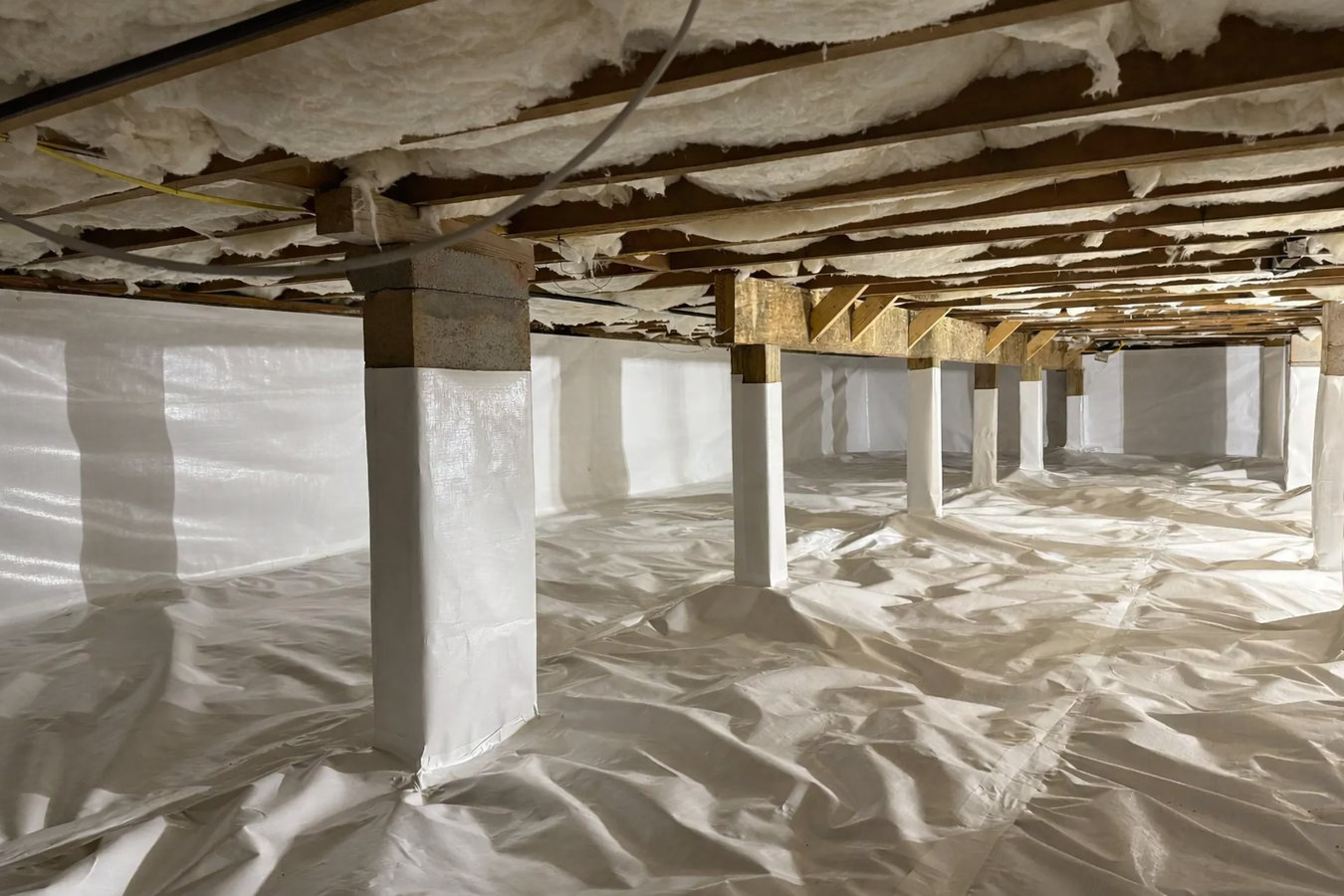
Abilene's clay soil releases moisture year-round. A properly installed vapor barrier stops that moisture before it reaches your floor structure, your insulation, and your energy bill.
Crawl space vapor barrier installation in Abilene covers your crawl space ground with heavy-duty plastic sheeting that blocks soil moisture from rising into your floor structure. Most single-family homes are finished in one to two days, with sealed seams, secured wall edges, and no disruption to your living areas.
Abilene's clay-heavy soils hold water long after rain stops, releasing moisture vapor upward even during dry stretches. Without a ground cover, that vapor enters your floor joists, your insulation, and eventually your living space. If you have noticed a musty smell after spring rain events, soft spots underfoot, or gradually rising energy bills, your crawl space is likely the source. A vapor barrier works alongside vapor barrier installation services when a more comprehensive approach is needed for the full crawl space system.
Most older Abilene homes were built without any crawl space moisture protection at all. Getting a barrier installed now is one of the most cost-effective things you can do for a home that has been sitting on bare soil for decades. The U.S. Department of Energy identifies moisture control as a foundational step in making a home more energy-efficient.
If areas of your floor have a slight give or bounce when you walk on them, moisture has likely been working on the wood subfloor for some time. In Abilene homes built before the 1980s, this is a common finding in crawl spaces that were never sealed. It is worth having someone look before the problem advances further.
A persistent earthy or musty smell that intensifies after Abilene's spring rain events is one of the clearest signals that moisture is moving from your crawl space into your living area. The smell is mold or mildew growing on damp wood or soil. If it is strongest in rooms closest to the ground, that points directly to the crawl space.
When moisture rises through an unprotected crawl space, it makes your home harder to heat and cool. Your HVAC system works harder to maintain a comfortable temperature against that damp underfloor environment. In Abilene's long, hot summers, that extra effort shows up clearly on your electric bill.
If you have ever looked into your crawl space and seen water droplets on metal pipes or duct connections, that is active moisture damage in progress. Abilene's clay soil releases moisture vapor even during dry stretches, and without a barrier it collects on every cooler surface it touches, accelerating rust and rot.
We install crawl space vapor barriers using heavy-duty polyethylene sheeting, typically 10 to 20 mils thick, with overlapping seams sealed with specialized tape and edges secured to the foundation walls. Thicker material holds up when contractors or inspectors need to enter the crawl space later, and proper seam sealing is what separates a barrier that works from one that just looks like it does.
Before the barrier goes down, we clear debris and standing water from the crawl space floor. Laying plastic over wet soil or debris traps the problem rather than solving it, and we will not rush that step. If we find standing water that indicates a drainage issue rather than normal moisture, we will tell you honestly before proceeding. This work pairs directly with crawl space insulation for homes where the floor assembly needs attention above the ground as well.
For homes with persistent humidity problems or a history of flooding, we can also discuss full crawl space encapsulation, which adds insulated wall coverage and a sealed vent system. Most Abilene homes do not need encapsulation, but a straightforward vapor barrier is a necessary first step in either direction. The Building Science Corporation provides detailed guidance on why proper seam coverage and wall attachment make the difference in how well a barrier performs long-term.
Best for most Abilene homes with a typical pier-and-beam or block crawl space and no active drainage issues.
Suited for crawl spaces that will see regular contractor access or where durability over decades is the priority.
For homes where accumulated soil, debris, or old deteriorated plastic needs to be removed before the new barrier goes in.
For homes with persistent humidity, history of flooding, or where the crawl space is used for storage and needs full moisture control.
Abilene sits on Taylor County's expansive clay soils, which swell when wet and shrink when dry. That constant cycle pushes moisture vapor upward through the ground surface year-round, not just during rainy seasons. Even in August, when the air above ground feels bone dry, the clay beneath your crawl space is releasing stored moisture. For homeowners in established neighborhoods near Sayles Boulevard, the Elmwood area, and older subdivisions near Hardin-Simmons University, where many homes were built in the 1950s through 1970s, there is a real chance the crawl space has never had any moisture protection at all.
Abilene's spring rain events add another layer of exposure. The area can receive significant rainfall in short bursts, and the clay soil cannot absorb it fast enough, so water pools near foundations before slowly draining. That surge of ground moisture is exactly when an unprotected crawl space takes on the most vapor. A properly installed barrier handles both the steady daily release and those spike events without any action needed from you. We serve homeowners throughout Abilene, Brownwood, and San Angelo, where the same clay soil conditions affect homes across West Texas.
The quality of vapor barrier contractors in Abilene varies, so it pays to vet anyone before you hire. Ask how many crawl spaces they have done locally and for references from recent jobs. A contractor who is willing to show you the finished installation before they leave is one who has confidence the work was done completely.
We will ask a few basic questions about your home and schedule a free on-site inspection. We reply within one business day, and a straightforward phone conversation is enough to get the process started.
A technician enters the crawl space through your access hatch, checks moisture levels, measures the space, and notes any debris or damage. This typically takes 30 to 60 minutes, and there is no charge. We will not quote you without looking first.
After the inspection, we walk you through what we found and give you a written estimate that spells out barrier thickness, seam sealing, wall coverage, and prep work. Ask questions, compare other quotes, and take your time. Nothing is signed on the spot.
On the day of work, we clear the crawl space floor, roll out the barrier, seal every seam, and secure the edges to the foundation walls. Before we leave, we show you the finished installation so you can see the completed work and verify it was done right.
Free crawl space inspection. Written estimate. No pressure to decide on the day.
(325) 283-1586We work on homes throughout Abilene and the surrounding West Texas area, which means we know the soil conditions, housing stock, and local permit requirements here. A contractor who works regularly in Taylor County understands the specific challenges that a national chain or out-of-area company simply will not.
A vapor barrier is only as good as its installation. We use heavy-duty polyethylene, overlap seams by at least 12 inches, tape every joint, and fasten the edges to your foundation walls. You can verify the finished work yourself, and we encourage you to.
We will not give you a number over the phone. A technician comes out, enters the crawl space, and gives you an honest assessment of what is there and what it needs. The inspection is free, and the written estimate that follows is itemized so you know exactly what you are paying for.
We photograph the crawl space before and after so you can see exactly what changed. You get that record with your written estimate, and we walk you through it before anyone starts work. Documented work is how you confirm the job was done completely.
Vapor barrier work is one of the few home improvements where you can actually look at the finished product and know whether it was done right. We build every job to pass that check. If something unexpected comes up during the inspection or installation, we tell you before proceeding, not after.
Full vapor barrier installation services for crawl spaces and slab applications, including seam sealing and foundation wall attachment.
Learn moreInsulation for the floor assembly above your crawl space, paired with a ground barrier for complete moisture and thermal control.
Learn moreAbilene's spring rain season is coming. Getting a barrier in place before the ground gets wet again is the most direct way to protect your floors and your home's structure.