Loading...
Serving Abilene, TX and surrounding areas. (325) 283-1586
Thin or settled attic insulation lets Abilene's summer heat straight into your home. Blown-in material fills gaps batts can't reach, bringing your attic up to the depth your climate demands.
Blown-in insulation in Abilene fills your attic floor with loose fiberglass or cellulose material that fills every gap, corner, and obstruction batt insulation misses. Most attic jobs in an average-sized home are completed in two to four hours, and the result is an even thermal barrier from one wall to the other.
If your home was built before 1980, there is a strong chance the original insulation has settled, thinned, or was never deep enough to begin with. Abilene's long cooling season, where summer heat stretches from late April through October, means your attic is working against your air conditioner for months at a stretch. Blown-in material restores that thermal barrier without tearing out what is already there.
For homes where the attic ceiling also has gaps around light fixtures or the hatch, combining blown in insulation with attic insulation and proper air sealing delivers the most complete improvement. If you are comparing methods, see our guide to home insulation options for the full picture.
If certain rooms feel like a different climate from others during Abilene summers, thin or missing attic insulation is one of the most common causes. Heat pours through the ceiling faster than your AC can handle it. You should not have to set your thermostat to 68°F just to keep one room livable.
Abilene's cooling season is long and intense. If your bill seems unusually high compared to neighbors with similar-sized homes, under-insulation is a likely cause. When heat pours through the ceiling, your air conditioner runs almost constantly trying to keep up.
If you look into your attic and can clearly see the wooden beams running across the floor, your insulation is almost certainly too thin. Properly insulated Abilene attics should have material deep enough to completely bury the joists. This is something you can check yourself with a flashlight.
Older homes in Abilene's established neighborhoods were built to insulation standards that are a fraction of what is recommended today. Whatever was originally installed has also likely settled and thinned over the decades. This is not a problem with your home, but it is fixable.
We install both fiberglass and cellulose blown-in insulation depending on what your attic needs. Cellulose is made from recycled paper treated to resist fire and pests, and it is especially good at filling irregular spaces. Fiberglass blown-in settles less over time, which makes it a strong choice for Abilene's dry climate where some settling is expected.
Before any material goes in, we air-seal gaps around light fixtures, pipes, and the attic hatch. Skipping that step is one of the most common shortcuts that reduces a job's effectiveness. In Abilene homes where clay-soil foundation movement has opened small cracks over the years, this sealing step matters a lot. For homes needing more comprehensive coverage, we also offer full attic insulation evaluations and complete home insulation assessments that cover walls, crawl spaces, and more.
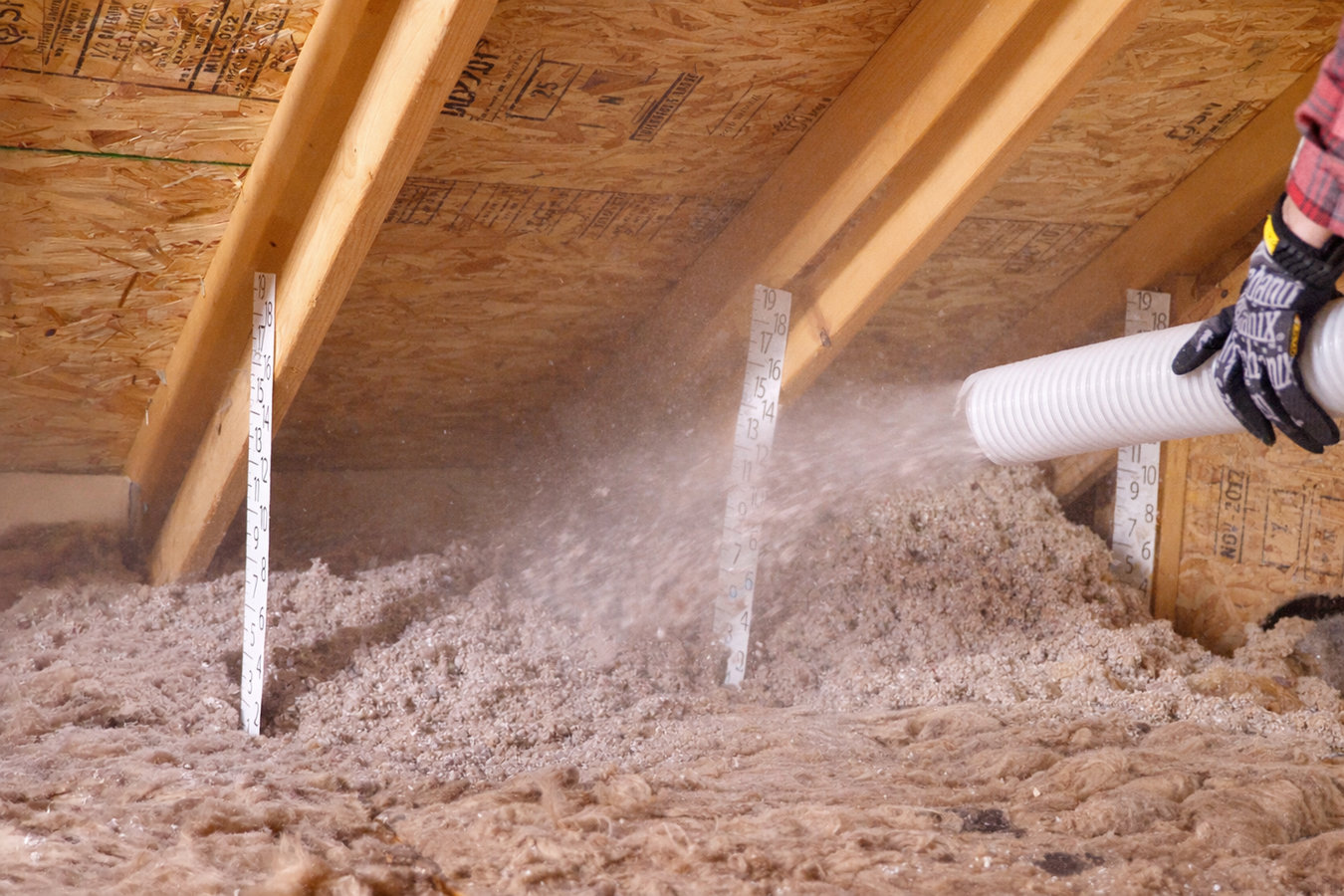
After the crew finishes, we leave small depth-marker stakes in the attic so you can verify the depth yourself. You paid for a specific R-value, and we want you to be able to confirm you received it.
Best for older homes with irregular joist spacing, obstructions, or existing insulation to top off.
Settles less over time, a strong choice for Abilene's dry climate and larger open attics.
The complete solution for homes where gaps around fixtures and the hatch are reducing insulation effectiveness.
For attics with some existing insulation that just needs to be brought up to the right depth for today's standards.
Abilene sits in climate zone 3, where summer temperatures routinely exceed 100°F and the cooling season stretches for months. Your attic can reach temperatures above 140°F on a hot afternoon. Thin or degraded insulation lets that heat pour straight into your living space, and your air conditioner runs almost without stopping trying to compensate.
A significant portion of Abilene's neighborhoods, particularly in North Abilene and the older central areas near downtown, were built in the 1950s through 1970s. Many of those homes were built with little or no attic insulation, or with materials that have since settled and thinned. Blown-in material is ideal for these houses because it works around old wiring, irregular joist spacing, and other obstructions without requiring a full tear-out.
We also serve homeowners throughout San Angelo, Brownwood, and the surrounding region. If you are in Midland or nearby, the same West Texas heat conditions apply and we can help there too.
We will ask a few basic questions about your home's age, size, and what you're experiencing. We respond within 1 business day. Most estimate visits can be scheduled within a few days of your call.
We go into your attic, measure current insulation depth, and check for air leaks or moisture. The assessment takes about 20 to 30 minutes, and you receive a written quote explaining exactly what material will be added and why before any work begins.
Before any material goes in, we seal gaps around light fixtures, pipes, and the attic hatch. This step makes the insulation more effective. Then the crew runs the blowing hose and installs the material to the correct depth, typically in one to three hours.
We leave depth-marker stakes in the attic so you can verify the final depth yourself. Before leaving, we walk you through what was done and answer any questions. There is no curing time, the insulation works immediately.
We respond within 1 business day. There is no obligation, and our estimates are always written and explained in plain terms. After you submit, someone from our office will call to schedule a free on-site visit where we measure your attic and give you a firm price before any work begins.
(325) 283-1586We have worked on homes across Abilene, San Angelo, Midland, and the surrounding region. That means we know the older housing stock, the clay-soil movement issues, and the specific depth targets needed for this climate zone.
Sealing gaps before blowing in the material is what separates a thorough job from a shortcut. We include it as a standard part of the process, not something you have to ask or pay extra for.
We leave small ruler-like depth stakes in the attic after every job. You can check the depth yourself with a flashlight before we even leave the driveway. According to the U.S. Department of Energy, verifiable installation depth is the single most important quality indicator for blown-in insulation work.
You receive a written quote that explains what will be done, what material will be used, and the total cost before we schedule the crew. No surprises when the bill arrives.
We focus on doing the job completely rather than quickly. Air sealing first, correct depth, depth markers left behind, and a walkthrough before we leave. That combination is what produces the comfort and bill improvements Abilene homeowners are looking for.
A whole-home assessment covering attics, walls, and crawl spaces to identify every place your home is losing conditioned air.
Learn moreComprehensive attic insulation service that pairs blown-in material with an attic inspection and air sealing to maximize results.
Learn moreAbilene summers start early and stay long. The sooner your attic is up to the right depth, the more cooling seasons you get the benefit.