Loading...
Serving Abilene, TX and surrounding areas(325) 283-1586
Abilene Insulation Company serves Anson, TX with attic insulation, blown-in upgrades, and air sealing built for Jones County homes. Most properties in Anson were built before Texas adopted a statewide energy code, which means the original attic coverage is often R-11 to R-19 — less than half the current standard for this climate zone. We have completed insulation projects across Jones County since 2022 and respond to all Anson inquiries within one business day.
Selected for the housing age, climate demands, and property types found across Anson and Jones County.
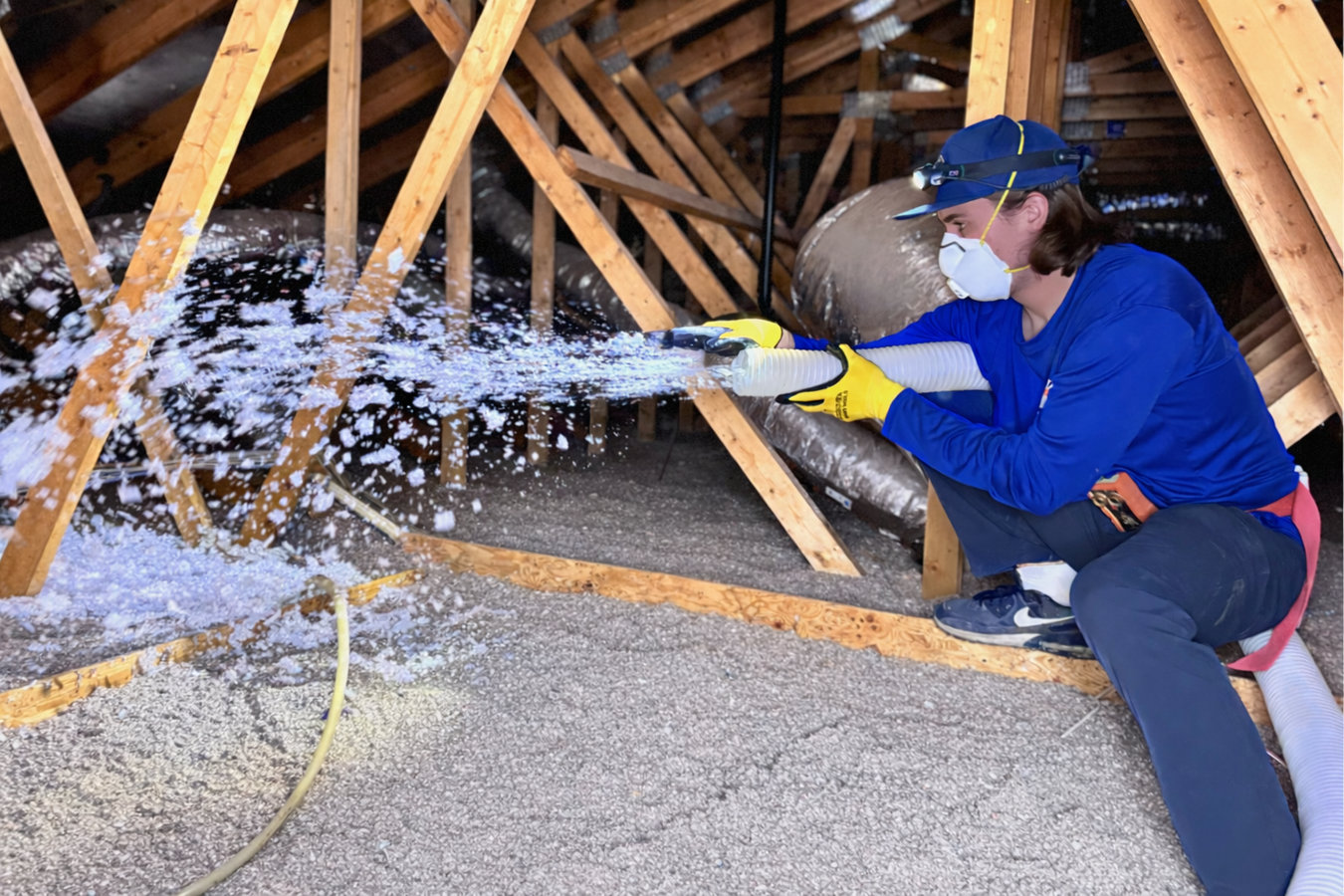
Jones County summers drive attic temperatures to 140°F or above at the roof deck. For Anson homes still carrying the original R-11 to R-19 that went in during mid-century construction, the gap between what is installed and what Climate Zone 3 requires is not a technicality — it shows up on the electric bill every July and August. Blown-in cellulose or fiberglass to R-38 or better installs over existing material in a single day with no ceiling disturbance and no structural changes.
Blown-in is the practical upgrade path for the majority of Anson's older attics. It fills irregular joist bays from decades-old framing, covers the full attic floor edge to edge without leaving gaps near soffits or around obstructions, and reaches target R-value in a single visit. For homes where original fiberglass batts are still in place but have settled or shifted, blown-in over the top is faster and less expensive than full removal.
The open Rolling Plains around Anson channels northwest winds that probe every gap in an older building envelope. Unsealed top plates, plumbing chases, recessed light cans, and attic hatch perimeters all act as bypass points where conditioned air escapes and superheated attic air enters. Air sealing those penetrations before insulation is installed is the step that determines whether R-38 on paper delivers R-38 in practice during a Jones County heat wave.
Anson has a share of older pier-and-beam homes where floors sit directly above an unconditioned crawl space. In summer that space absorbs ground heat; in winter it exposes the floor assembly to cold air from the same open vents. Insulating the floor joists with batts or rigid foam, paired with a ground-cover vapor barrier, addresses both the thermal problem and the soil moisture that migrates into wood framing through Jones County's clay-heavy soils.
Closed-cell spray foam is the right choice for rim joists, conditioned attic conversions, and areas where air sealing and insulation need to happen in one product. At R-6 to R-7 per inch, it reaches high R-values in spaces too shallow for blown-in material, and it bonds directly to framing, creating a continuous air barrier that no batt product can match under the sustained wind pressure common across the Jones County plains.
Anson's residential inventory skews older, and many homes have never had an insulation upgrade since original construction. Retrofit work — whether adding blown-in over an existing attic floor, dense-packing wall cavities through small access holes, or adding crawl space coverage — does not require tearing out finished surfaces. The assessment step determines which approach fits each home's specific conditions before any material is ordered.
Anson is the county seat of Jones County, with a population of about 2,294 and a housing stock that reflects more than a century of continuous settlement on the West Texas plains. Most of the city's single-family homes were built between the 1940s and the 1980s — before Texas adopted a residential energy code in 2001 and before R-38 became the prescriptive minimum for Climate Zone 3 attics. The insulation that went in during those decades was whatever the builder chose, and in most cases it was R-11 to R-19, if that.
Jones County sits at roughly 1,700 feet elevation on the eastern edge of the Rolling Plains, where summer temperatures regularly reach 95 to 101°F from June through August and the sun beats directly down on low-slope residential roofs with minimal shade from trees or neighboring structures. The flat, open terrain also means persistent northwest wind with few natural windbreaks — a condition that drives air infiltration through every gap in an older building envelope and reduces the effective performance of any insulation that is installed without a thorough air-sealing step first.
The clay-heavy soils common across Jones County expand and contract with seasonal moisture changes, which can shift pier-and-beam foundations over time and create new moisture infiltration pathways in crawl spaces. Homes with open crawl spaces and no ground vapor barrier see soil moisture migrate upward into floor framing year-round. That moisture problem, combined with inadequate attic insulation above, means the building envelope is working against the HVAC system from both directions simultaneously.
Anson's agricultural and ranching heritage also means the surrounding Jones County countryside includes farmhouses, rural ranch properties, and county-road addresses where insulation upgrades have been deferred for decades. The same conditions that affect in-town homes — pre-code construction, West Texas wind, and clay soil movement — apply with equal or greater force to the older rural properties scattered across the county.
We have been doing insulation work in Jones County since 2022, pulling assessments across Anson city addresses and the rural county roads that branch off US-83 and US-180 toward the surrounding ranchland. Attic access in Anson's older in-town homes is almost always through a ceiling hatch — rarely a pull-down stair — and those attics frequently have low-clearance sections near the eaves where blown-in coverage is the only practical option for reaching full R-value. That is a normal part of the job here.
Anson sits at the intersection of US-83/277 and US-180, which also describes how we approach the area. From our Abilene base, the drive north on US-83 takes about 35 minutes — a straight shot through open ranchland past Lake Fort Phantom Hill, the reservoir north of Abilene that sits just south of Jones County. The historic downtown centered on the Jones County Courthouse is where we typically find the oldest housing stock, including wood-frame homes that predate even the post-WWII building boom. The 1907 Anson Opera House — once documented as the largest music hall between Fort Worth and El Paso — anchors the courthouse block and is surrounded by the kind of early-twentieth-century construction that presents the steepest insulation deficits.
Jobs in Anson sometimes serve as a connecting point between our work in Abilene to the south and our occasional trips north toward Haskell in Haskell County, where similar housing profiles and climate conditions create comparable demand. The Texas Cowboys' Christmas Ball, held each December at Pioneer Hall in Anson, is probably the most widely recognized cultural marker of this community — it draws visitors from across West Texas and is one of the oldest frontier dance traditions in the state. Mention it to a Jones County homeowner and they know exactly what you mean.
Call or submit the online estimate request. We respond to all Anson and Jones County inquiries within one business day — same day for calls placed during business hours. There is no sales call and no pressure; we confirm what type of property it is and set up a visit.
A crew member visits the property, measures existing attic depth and material condition, identifies air sealing priorities at the ceiling plane, and checks crawl space access and moisture if applicable. You do not need to be present if access is arranged. The written estimate comes with specific R-value targets and material recommendations — no charge, no obligation.
The price is confirmed in writing before any work starts. If a permit is required for your scope, we handle the submission with the City of Anson. Most Jones County jobs are on the schedule within the same week as the assessment visit.
After installation, a Texas TDLR certificate is left in the attic specifying the insulation type, manufacturer, installed depth, and R-value achieved. That document satisfies inspection requirements, supports a federal 25C tax credit claim, and gives you a clear record for any future home sale.
We respond to Anson and Jones County inquiries within one business day. The on-site assessment is free with no obligation attached. After you reach out, we confirm a visit time, measure your attic, and provide a written estimate before any work begins.
(325) 283-1586Anson has been the seat of Jones County since its founding in 1882 — originally platted as Jones City in 1881 and renamed in honor of Anson Jones, the last president of the Republic of Texas before annexation to the United States. The city sits at the intersection of US-83/277 and US-180, which has historically made it a regional supply and service center for the surrounding ranchland and cotton farming operations. Lake Fort Phantom Hill, a reservoir a few miles south of the city limit, provides waterfront recreation and has supported a small lakeside residential community since it was built.
Downtown Anson is anchored by the Jones County Courthouse square, where a cluster of historic markers and early-twentieth-century buildings tell the story of the city's frontier past. The 1907 Anson Opera House — documented in the Library of Congress photo archive as once being the largest music hall between Fort Worth and El Paso — still stands as the most prominent architectural landmark of the historic district. The residential streets near the courthouse represent some of the oldest housing stock in Jones County, with a concentration of wood-frame construction that predates modern energy standards by decades.
The city's most celebrated cultural event is the Texas Cowboys' Christmas Ball, held each December at Pioneer Hall. It is one of the oldest frontier dance traditions in Texas and draws visitors from across the state. The agricultural and oil economy that shaped Anson's growth continues to define the character of the surrounding county, where cotton farming, ranching, and energy production remain part of the landscape.
The residential mix in Anson is primarily single-story wood-frame homes on standard city lots, with a share of older pier-and-beam construction in the established neighborhoods. Most properties were built before the energy code era. Homeowners in the surrounding county and the communities along US-83 toward Stamford to the north face similar housing age and climate conditions, and we serve that corridor regularly.
Spray foam seals air gaps and adds R-value in one application, making it one of the most effective options for attics, walls, and crawl spaces.
Learn moreProper attic insulation is the single biggest factor in keeping your home comfortable and your energy bills predictable year-round.
Learn moreBlown-in insulation reaches tight corners and irregular cavities that batts cannot, delivering consistent coverage across large areas quickly.
Learn moreWhole-home insulation assessments identify the weakest points in your building envelope and address them with the right materials.
Learn moreOld, compressed, or contaminated insulation reduces performance; removal clears the way for a fresh, properly installed system.
Learn moreInsulating the crawl space floor or walls keeps moisture and cold air from migrating into the living areas above.
Learn moreWall insulation reduces heat transfer through the building envelope and lowers the load on heating and cooling equipment.
Learn moreAir sealing closes the gaps, cracks, and penetrations where conditioned air escapes and outside air enters uncontrolled.
Learn moreBasement insulation stabilizes temperatures in the lowest level of the home and prevents cold floors from pulling heat out of the rooms above.
Learn moreClosed-cell foam provides the highest R-value per inch available and acts as both an air and vapor barrier in a single layer.
Learn moreOpen-cell foam is a cost-effective choice for interior walls and attics where a vapor-permeable, sound-dampening material is preferred.
Learn moreSealing the attic floor before adding insulation prevents stack-effect air movement and dramatically improves overall thermal performance.
Learn moreA vapor barrier installed on the crawl space ground stops ground moisture from rising into floor framing and living areas.
Learn moreVapor barrier installation protects wall assemblies and below-grade spaces from moisture accumulation that leads to mold and structural decay.
Learn moreRetrofit insulation adds thermal protection to existing walls and attics without requiring full demolition or major reconstruction.
Learn moreCommercial insulation solutions for warehouses, office buildings, and industrial facilities reduce operating costs and improve occupant comfort.
Learn moreServing these cities and communities.
Most Jones County jobs are scheduled within the same week as the free on-site assessment.