Loading...
Serving Abilene, TX and surrounding areas(325) 283-1586
Abilene Insulation Company provides insulation contractor services throughout Clyde, TX, covering spray foam insulation, attic upgrades, and air sealing for homes across Callahan County. Our base in Abilene puts us just 14 miles from Clyde — close enough to reach most jobs on the same morning you call. Every installation is TDLR-documented, and we respond to all Clyde inquiries within one business day.
Matched to Callahan County's building stock, climate, and property types.
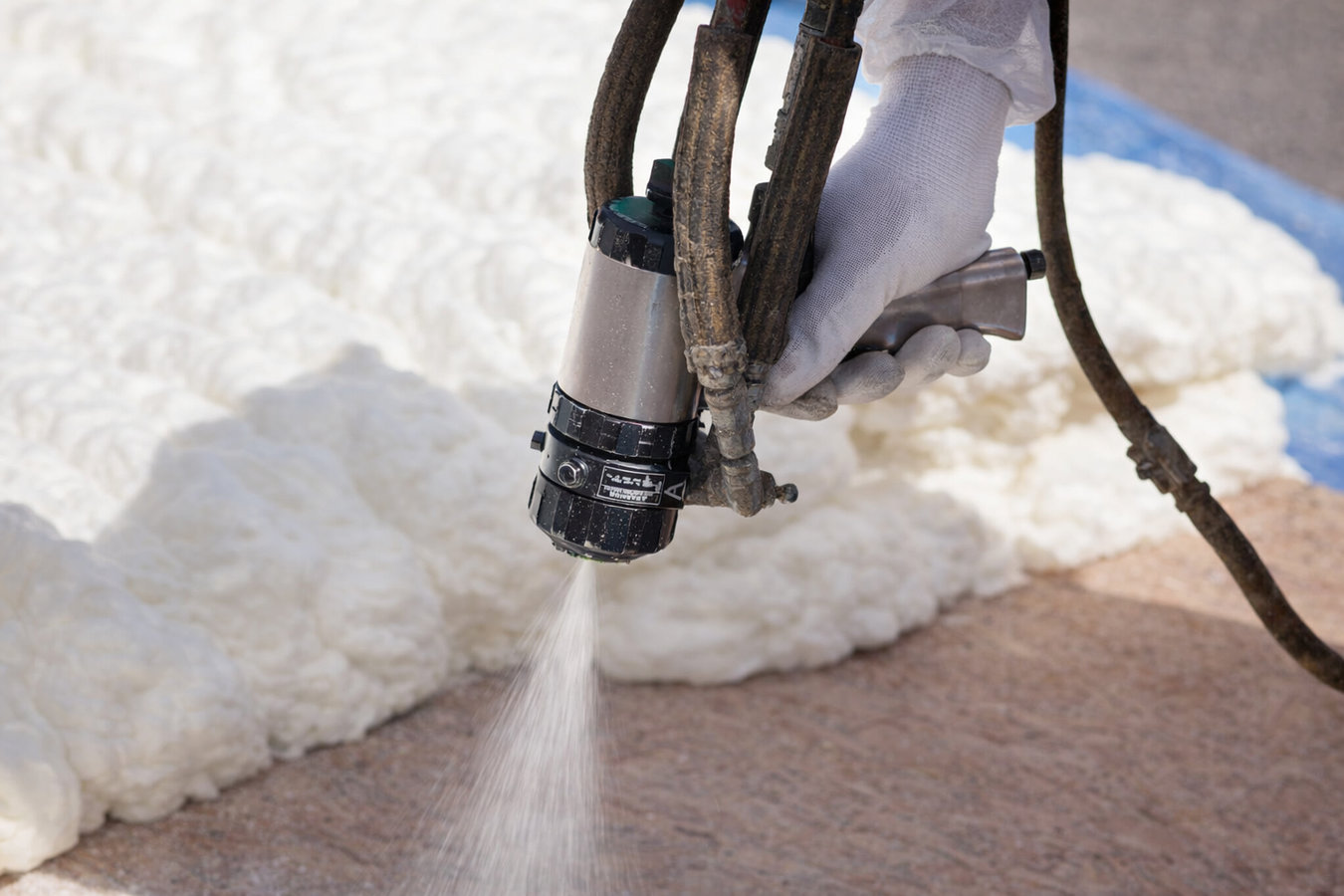
Clyde sits on the open I-20 corridor where sustained winds off the West Texas plains drive air infiltration through any gap in an aging building envelope. Closed-cell spray foam bonds directly to framing and sheathing, eliminating the air pathways that batted insulation cannot stop. For Clyde homes with ductwork in the attic, a conditioned-attic spray foam conversion keeps that equipment inside the thermal envelope instead of baking in 150°F summer heat.
With 71.8% of Clyde's housing units owner-occupied, most homeowners here are investing in property they plan to stay in long-term. Reaching R-38 in the attic — the current IECC Climate Zone 3 minimum — delivers lower cooling bills through every West Texas summer and pays back the investment over the life of the home. Homes built before 2001 have no mandatory insulation baseline; an attic upgrade is often the fastest path to measurable comfort and energy savings.
Blown-in cellulose or fiberglass fills over existing material without disruption to ceilings below, installs around irregular framing, and reaches tight spots near the eaves that batts cannot cover. For Clyde's established homeowner community — many with homes built in the decades following the Texas and Pacific Railway's arrival — blown-in is a one-day job with no interior disruption and results you can feel from the first bill cycle.
Adding insulation on top of an unsealed ceiling plane captures roughly half the potential benefit, because conditioned air still escapes through top-plate gaps and penetrations around plumbing and electrical. In Clyde's I-20 wind corridor, those infiltration pathways are under constant pressure. Sealing them before blown-in installation is the step that makes the difference between insulation that performs and insulation that underdelivers.
Older Clyde homes on pier-and-beam foundations have uninsulated floor systems sitting above open crawl spaces. Without insulation below the floor and a vapor barrier on the ground, soil moisture migrates upward into floor framing year-round. Insulating the crawl space reduces humidity in the floor system and noticeably improves floor-level comfort during winter cold fronts that push across Callahan County.
Clyde's position on Interstate 20, 14 miles east of Abilene, places it in one of the more wind-exposed residential corridors in the region. The flat Callahan County terrain between Clyde and Abilene offers no natural windbreak, and sustained gusts off the West Texas rolling plains are a year-round reality here. In older construction — homes without rigid foam sheathing or modern housewrap — wind infiltration can reduce the effective R-value of batt insulation substantially below the labeled figure. Homes that seem adequately insulated on paper can perform as though they are not.
Clyde's housing stock reflects its history as a railroad town and a stable, working community. Many of its 1,485 households are in homes built before Texas enacted its first statewide residential energy code in 2001, meaning no minimum insulation standard applied when those structures were framed. The median age in Clyde is 38.9 years, and 18.7% of residents are 65 or older — a high senior share that tends to correlate with long owner-occupancy and aging homes that have never received an insulation upgrade.
IECC Climate Zone 3 demands cover both ends of the temperature range. Clyde summers push well past 95°F, and winter cold fronts can drive temperatures below 20°F when Arctic air masses push across the Rolling Plains — the same conditions that caused widespread pipe failures across the region during the February 2021 freeze. Attic insulation that is adequate for summer cooling is equally necessary for preventing heat loss during those short, severe winter events.
The mix of residential and light commercial properties along Clyde's main corridor, combined with the surrounding rural Callahan County lots, creates a broad range of insulation needs. Owner-occupied homes investing in long-term comfort, rural frame structures on country acreage, and commercial buildings along US-180 all present insulation conditions that vary significantly from property to property.
Clyde is a short drive from our Abilene base — 14 miles on I-20, which means we can reach most Clyde jobs with a morning start and still complete work the same day. We pull permit paperwork for applicable Clyde projects through the City of Clyde, which has its own building department separate from Callahan County and processes permits on a different timeline than Abilene. The older homes in Clyde's established residential streets — particularly those near Clyde Consolidated ISD's campus on Shalimar Drive — tend to be the jobs with the most attic clearance constraints and the greatest need for air sealing before blown-in material goes in.
Getting to properties east of the downtown corridor means heading down US-180, the old highway that runs parallel to I-20 through this part of Callahan County. Rural properties on the county roads south and north of Clyde — frame construction on slab or pier-and-beam, often with minimal original insulation — are a significant part of the work we do here. The terrain is flat enough that we rarely encounter the access issues that come up in areas with hillier topography, but attic work in older homes with low pitches and tight eave clearance requires patience and the right nozzle selection.
We serve Abilene as our primary market to the west, and we regularly take on jobs east of Clyde toward Baird and into surrounding Callahan County. Homeowners between Clyde and Cisco further east on I-20 are well within our service range and face similar aging construction and wind exposure conditions.
Call or submit the estimate form. We respond to Clyde area inquiries within one business day — same day for calls during business hours. Because we are 14 miles away on I-20, we can often schedule the assessment visit sooner than a company based further out.
A crew member visits the property, inspects attic depth and condition, measures any crawl space, and checks for obvious air infiltration points. You receive a written estimate with specific R-value targets and material recommendations. The visit is free and there is no obligation to proceed.
The price is confirmed in writing before any work starts. If the project requires a City of Clyde building permit, we handle the submission. Most Callahan County residential jobs are scheduled within the same week as the estimate visit.
After installation, a TDLR-required certificate is posted in the attic identifying the material, manufacturer, installed thickness, and R-value achieved. That paperwork satisfies inspection requirements and gives you a documented record for insurance purposes and any future resale.
We respond to Clyde and Callahan County inquiries within one business day. The on-site estimate is free and carries no obligation. After you reach out, we confirm a visit time, inspect the home, and provide a written quote before any work starts.
(325) 283-1586Clyde is a city in Callahan County with a 2023 estimated population of about 4,157, sitting directly on Interstate 20 between Abilene to the west and Baird — the Callahan County seat — to the east. The city traces its origin to 1876, when early settlers arrived in what would become one of the Texas and Pacific Railway's supply stops. The name "Clyde" is widely believed to come from a railway crew foreman whose workers called the supply tent "Clyde's." A post office followed on June 27, 1881, and by 1925 the town had grown to support 45 businesses, two banks, and two cotton gins.
Today Clyde functions as a practical residential base for households that work or shop in both Abilene and the smaller communities along I-20 to the east. The city has a notably high homeownership rate: according to 2020 Census data, 71.8% of occupied housing units are owner-occupied. That is not an abstract statistic — it means the majority of Clyde households are invested in their property and more likely to maintain, upgrade, and improve it over time. The Clyde Consolidated Independent School District , headquartered on Shalimar Drive, is one of the community's most recognized anchors — its boundaries extend into portions of Shackelford, Jones, and Taylor counties, and the district's Mighty Bulldog Band has earned recognition at the Texas UIL State Marching Contest multiple times.
Clyde Lake, a city-owned reservoir on the southwestern edge of town, offers fishing, boating, and camping with full hook-ups — an uncommon amenity for a city of Clyde's size and a consistent gathering point for residents throughout the year. The local economy reflects a balanced mix of retail, service, and agricultural activity, with no single industry dominating the employment base the way oil or a military installation might in other parts of West Texas.
Our primary service territory begins right here in Clyde and extends west to Abilene. Most Clyde homeowners who contact us are dealing with the same pre-code housing conditions found across this corridor — homes built without a mandatory insulation standard and now facing rising energy costs that make an upgrade financially straightforward.
Spray foam seals air gaps and adds R-value in one application, making it one of the most effective options for attics, walls, and crawl spaces.
Learn moreProper attic insulation is the single biggest factor in keeping your home comfortable and your energy bills predictable year-round.
Learn moreBlown-in insulation reaches tight corners and irregular cavities that batts cannot, delivering consistent coverage across large areas quickly.
Learn moreWhole-home insulation assessments identify the weakest points in your building envelope and address them with the right materials.
Learn moreOld, compressed, or contaminated insulation reduces performance; removal clears the way for a fresh, properly installed system.
Learn moreInsulating the crawl space floor or walls keeps moisture and cold air from migrating into the living areas above.
Learn moreWall insulation reduces heat transfer through the building envelope and lowers the load on heating and cooling equipment.
Learn moreAir sealing closes the gaps, cracks, and penetrations where conditioned air escapes and outside air enters uncontrolled.
Learn moreBasement insulation stabilizes temperatures in the lowest level of the home and prevents cold floors from pulling heat out of the rooms above.
Learn moreClosed-cell foam provides the highest R-value per inch available and acts as both an air and vapor barrier in a single layer.
Learn moreOpen-cell foam is a cost-effective choice for interior walls and attics where a vapor-permeable, sound-dampening material is preferred.
Learn moreSealing the attic floor before adding insulation prevents stack-effect air movement and dramatically improves overall thermal performance.
Learn moreA vapor barrier installed on the crawl space ground stops ground moisture from rising into floor framing and living areas.
Learn moreVapor barrier installation protects wall assemblies and below-grade spaces from moisture accumulation that leads to mold and structural decay.
Learn moreRetrofit insulation adds thermal protection to existing walls and attics without requiring full demolition or major reconstruction.
Learn moreCommercial insulation solutions for warehouses, office buildings, and industrial facilities reduce operating costs and improve occupant comfort.
Learn moreServing these cities and communities.
Most Callahan County jobs are scheduled within the same week of the initial free on-site assessment.