
Loading...
Serving Abilene, TX and surrounding areas. (325) 283-1586
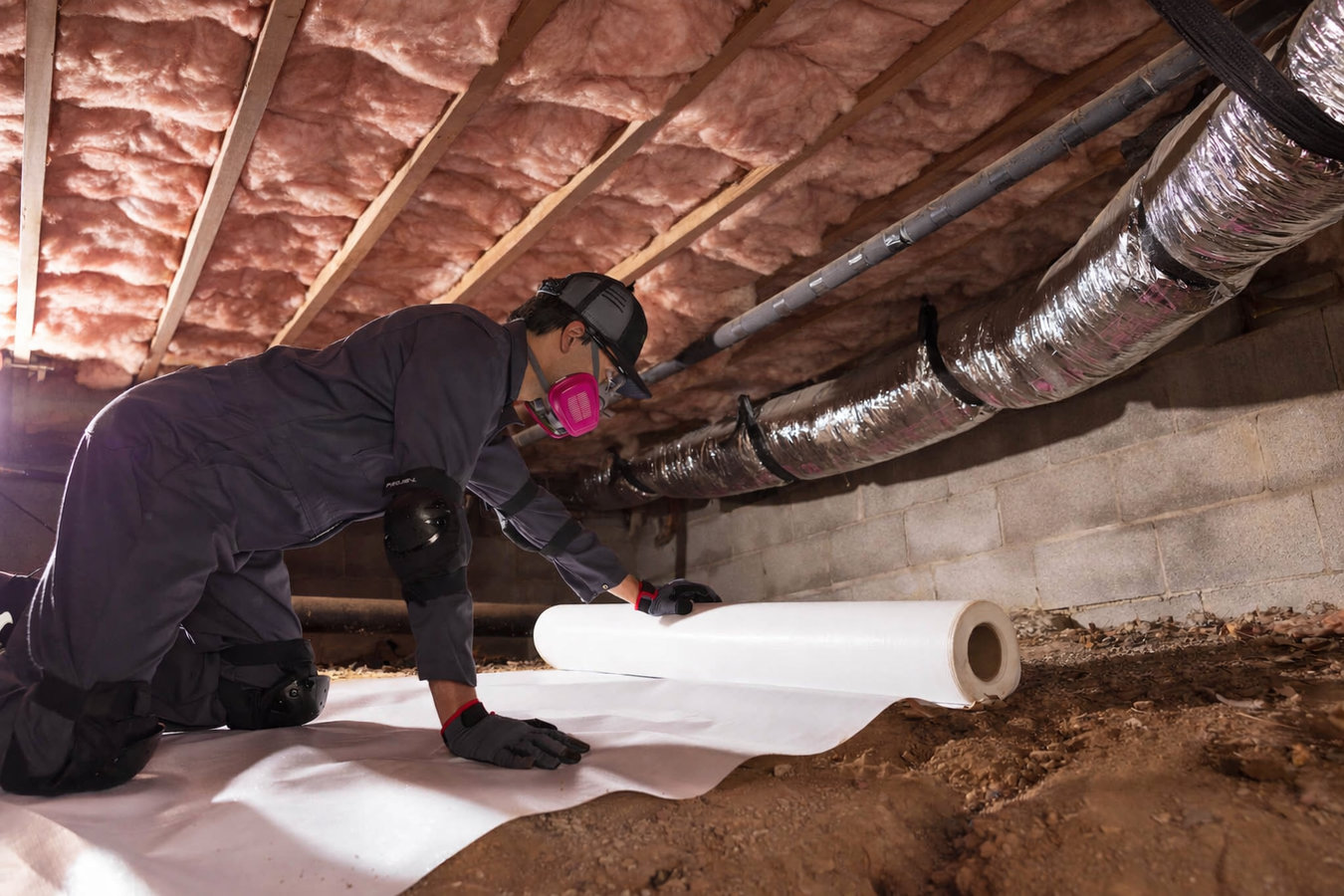
Abilene's clay soil releases moisture year-round. Vapor barrier installation seals that moisture out of your floors, your insulation, and your HVAC system before it causes damage you cannot see until it is expensive to fix.
Vapor barrier installation in Abilene places heavy-duty polyethylene sheeting across your crawl space ground to block moisture from rising into your home's floor structure. Most single-family crawl space jobs are completed in one day, with sealed seams, secured wall edges, and no need to leave your home during the work.
The signs that this work is overdue are often easy to miss until they become expensive. A faint musty smell, floors that feel slightly soft underfoot, or gradual increases in your energy bill can all point to ground moisture working its way up from an unprotected crawl space. Abilene's clay soil makes this a year-round concern, not just a rainy-season problem, because clay holds water and releases it slowly even after the rain stops. This service works closely with crawl space vapor barrier services when a thorough ground-up approach is the right choice for your home.
Many older Abilene homes were built without any moisture protection under the crawl space at all, and even homes that had a thin barrier installed years ago may be working with material that has degraded beyond usefulness. The EPA notes that catching moisture problems early, before mold establishes itself on floor joists and insulation, is far less costly than addressing structural damage after the fact.
Areas of your floor that give slightly when you walk on them suggest moisture has been working on the wood subfloor beneath you for some time. In Abilene homes on pier-and-beam foundations, common in older neighborhoods, this is one of the first signs floor joists are absorbing moisture from an unprotected crawl space. It does not mean the floor is about to fail, but it does mean the problem is worth addressing now.
A persistent musty or earthy smell coming from floor vents, closets near exterior walls, or the lowest level of your home is a clear sign of moisture accumulating below. In Abilene, this smell often becomes more noticeable after one of the area's sudden heavy rain events, when ground moisture spikes quickly. That smell is frequently mold or mildew beginning to grow on damp wood, and a vapor barrier is the first line of defense.
Moisture in your crawl space makes your insulation less effective, because wet insulation does not hold heat or cool air the way dry insulation does. If your utility bills have been climbing and you have not changed your habits, having someone look under the house is a worthwhile step. Abilene summers are long and hot, and your HVAC system works hard enough without fighting moisture-damaged insulation.
If your Abilene home was built before 1980 and sits on a pier-and-beam foundation, there is a reasonable chance it has no vapor barrier at all, or one that has degraded over decades. Older plastic sheeting becomes brittle and cracks over time, leaving gaps that let moisture through freely. A quick contractor inspection, usually free, will give you a clear answer about what is currently under your home.
We install vapor barriers using heavy-duty polyethylene sheeting, typically 10 to 20 mils thick depending on your crawl space needs and access frequency. Thicker material resists punctures when contractors or inspectors need to enter later, and proper installation starts with seam overlaps of at least 12 inches, sealed with specialized tape, and edges fastened to the foundation walls rather than left loose. That level of detail is the difference between a barrier that performs for 20 years and one that fails in three.
Before the barrier goes down, we clear any debris, standing water, or damaged material from the crawl space floor. Installing plastic over wet soil or accumulated debris traps moisture rather than blocking it, and we will not skip that step to move faster. If we find standing water that indicates a drainage problem rather than normal soil moisture, we will tell you honestly what the right next step is before any material is laid. This service pairs well with retrofit insulation when you are upgrading an older Abilene home and need both the ground moisture sealed and the floor assembly brought up to a current standard.
For homes where a standard vapor barrier is not sufficient, we can discuss full crawl space encapsulation, which includes closing off foundation vents and adding humidity control. Most Abilene homes do not need that level of intervention, but a vapor barrier installation is the necessary first step in any direction. The Building Science Corporation covers the technical basis for why ground coverage and wall attachment work together to control moisture effectively.
Best for most Abilene crawl spaces where the barrier will not see heavy foot traffic after installation.
Suited for crawl spaces accessed regularly by HVAC or plumbing contractors, where durability over decades matters.
For crawl spaces with accumulated debris, old degraded plastic, or minor standing water that must be cleared before the new barrier goes down.
For homes with persistent high humidity, flooding history, or where the crawl space needs complete moisture and thermal control.
Taylor County's clay soils are what make vapor barrier installation particularly important in this area. Clay holds onto water and releases it slowly, which means the ground under your home is producing moisture vapor even in the middle of a dry summer. The Elmwood neighborhood, the Lytle area, and older sections near Hardin-Simmons University are full of homes built in the 1950s through 1970s, most of which went up before moisture protection in crawl spaces was standard practice. Many have been sitting on bare soil their entire lives.
Abilene's rainfall pattern adds a seasonal surge on top of that daily moisture release. The area gets rain in concentrated bursts, and after a prolonged dry spell the ground cannot absorb it fast enough. Water pools near foundations before draining, and that surge is when an unprotected crawl space takes on the most vapor. Once the soil absorbs that water, it releases it slowly for weeks afterward. We work on homes throughout Abilene, Midland, and Odessa, where the same Permian Basin soil conditions create the same moisture challenges for homeowners.
Abilene's persistent south and southwest winds can also pull humid air through open foundation vents and into the crawl space from outside. A vapor barrier on the ground limits how much of that moisture gets absorbed into your floor structure even when outdoor air is moving through the space. If your crawl space has open foundation vents, as most homes in this area do, a well-installed ground barrier is the first and most cost-effective line of defense against the combined effect of soil moisture and wind-driven humidity.
We ask a few basic questions about your home and any symptoms you have noticed. You do not need to know all the answers, just describe what you have seen or smelled. We reply within one business day and schedule a free on-site assessment.
A technician enters your crawl space, checks conditions, measures the space, and looks for any drainage issues or debris that needs to be addressed first. This visit is free and takes about 30 to 60 minutes. We will not give you a number without seeing the space.
After the assessment, you receive a written quote that specifies material thickness, seam handling, wall attachment, and any site prep included. Take your time, ask questions, and compare other quotes. Nothing is signed or scheduled until you are ready.
On installation day, the crew clears the floor, rolls out the barrier, seals every seam, and secures the edges to the walls. Most jobs finish in a single day. Before leaving, the crew walks you through the finished work so you can see and verify it was done correctly.
Free on-site assessment. Written itemized estimate. No obligation to decide the same day.
(325) 283-1586We work on homes throughout Taylor County and the surrounding West Texas region, which means we understand exactly what Abilene's clay soil does to an unprotected crawl space over time. That local experience shapes how we approach every job, from the material thickness we recommend to the prep work we do before the barrier goes down.
We seal every seam with tape, overlap sheets by at least 12 inches, and fasten the edges to your foundation walls. Before we leave, we walk you through the finished work so you can check it yourself. A good installation is visible, and we build every job to pass that check.
Crawl space conditions vary enough that quoting over the phone is not a service we offer. A technician comes out, enters the space, and gives you an honest assessment before any number is discussed. The visit is free, and the written estimate that follows is itemized line by line.
We photograph the crawl space before and after so you can see exactly what changed. That record comes with your written estimate, and we walk you through it before work begins. Documented work is how you confirm the job was done right.
A vapor barrier installation is one of the few home projects where the finished work is something you can actually see and evaluate. We know that, and we build every job accordingly. If the inspection reveals something unexpected, we tell you before the crew starts work, not after.
Upgrading insulation in an existing Abilene home, from attic to crawl space, without a full renovation.
Learn moreDedicated crawl space ground cover installation to block soil moisture from reaching your floor structure.
Learn moreAbilene's clay soil is working against your home year-round. Getting a barrier installed before the next heavy rain season is the most direct way to protect your floors and reduce your energy costs.