Loading...
Serving Abilene, TX and surrounding areas(325) 283-1586
Abilene Insulation Company serves Coleman, TX with full home insulation services, including attic blown-in upgrades, crawl space insulation, and air sealing for Coleman County homeowners. With 68.9% of occupied units owner-occupied and a median resident age of nearly 47, Coleman is a community of established homeowners whose properties often predate modern energy codes by decades. We respond to all Coleman inquiries within one business day and have completed jobs across Coleman County since 2022.
Matched to Coleman County's mix of older single-family homes, pier-and-beam foundations, and the wide temperature swings of IECC Climate Zone 3.
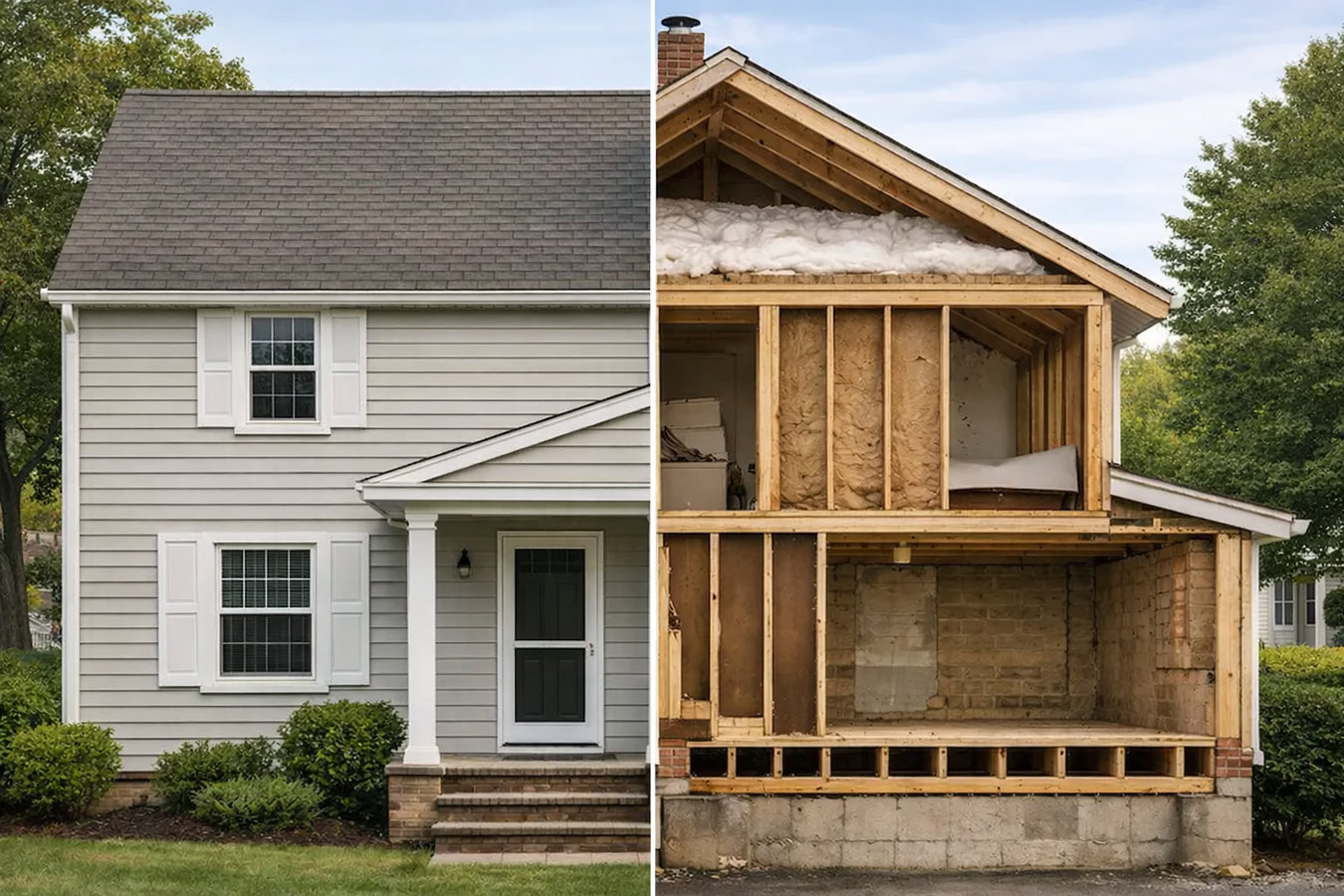
Most Coleman homes were built before Texas adopted a residential energy code, which means the insulation in the attic, walls, and floor systems reflects whatever the builder chose at the time rather than a performance standard. A whole-home insulation assessment starts at the attic, where the payback is fastest, and works outward to walls and crawl spaces based on what each property actually needs. Coleman's older housing stock — with a median owner age of nearly 47 years — is exactly the kind of established, long-term homeownership context where this work pays off over many years of reduced utility bills.
Coleman sits in IECC Climate Zone 3, where attic temperatures on a July afternoon can exceed 140°F at the roof deck. The code minimum of R-38 at the attic floor is not an arbitrary number; it is the threshold at which the thermal barrier performs its actual function during the six-month cooling season that defines summer energy costs for Coleman homeowners. Blown-in cellulose or fiberglass reaches full coverage in a single day with no ceiling disturbance.
Coleman has a meaningful number of older homes on pier-and-beam foundations, particularly in the established residential streets near Hords Creek. An open crawl space with no floor insulation transfers temperature stress from the ground directly into the living area above it. Insulating the floor joists and installing a ground cover vapor barrier addresses both the thermal problem and the soil moisture that migrates upward into wood framing year-round in this climate.
Coleman County experiences the persistent west Texas wind that crosses the open Rolling Plains with minimal natural windbreak. That wind finds every gap in an older building envelope — around recessed light cans, through plumbing chases, along attic hatch perimeters — and pushes conditioned air out while drawing unconditioned air in. Air sealing at the top plate before insulation is installed is what separates a job that hits its R-value on paper from one that actually delivers it in July.
Blown-in is the standard upgrade path for Coleman homes that need more attic coverage without a full renovation. The material fills around existing framing, reaches tight eave areas that batts cannot cover, and installs on top of whatever original material is present. For the many Coleman properties with original 3.5-inch batts still in place from the 1960s or 1970s, a blown-in top-off to R-38 or better produces the single largest energy return of any improvement available at that price point.
Pier-and-beam homes near Hords Creek and across older Coleman neighborhoods often have bare soil crawl spaces where ground moisture rises into the subfloor framing continuously through the humid spring months. A proper ground-cover vapor barrier, lapped and sealed at the seams, stops that moisture migration at the source. It is typically installed alongside crawl space insulation as one coordinated scope rather than two separate projects.
Coleman is the county seat of Coleman County, with about 3,912 residents and 2,310 housing units. The city has one of the older demographic profiles in the region — a median age of 46.9 years and 25.3% of residents aged 65 or older. Those numbers translate directly to a housing stock where long-term owner-occupants are common, major renovations are uncommon, and the original insulation that went in during construction is often still in place, decades past its useful service life.
Texas did not adopt a statewide residential energy code until 2001. Homes built in Coleman before that date — a majority of the city's housing units — were constructed without a mandated minimum insulation level. Whatever went in during the original build reflected builder preference and material costs of the era, not a thermal performance standard. Typical attic insulation from the 1960s and 1970s was R-11 or less; today's code minimum for Climate Zone 3 is R-38. That gap is not a technicality — it represents a home that is spending significantly more on heating and cooling than it needs to.
Coleman's climate is demanding in both directions. Summer highs regularly break 100°F across the surrounding ranchland and lake country, and winter cold fronts periodically drive overnight lows into the teens. That wide temperature range means the insulation system has to perform through a long cooling season and periodic hard freezes — not just one or the other. Homes that are thin on attic coverage or have open crawl spaces face elevated heating and cooling costs through every season of the year.
The area's ranching and agriculture heritage also means a meaningful share of properties include outbuildings, older farmhouses, and rural county road addresses where insulation has been deferred even longer than in the city proper. With five recreational lakes within 30 miles — including Hords Creek Lake and Lake O.H. Ivie — Coleman also has a stock of seasonal cabins and weekend properties that can present some of the most significant insulation deficits we encounter in this part of West Texas.
We pull permits for Coleman projects through the City of Coleman, which handles building review separately from Coleman County. The older homes along South Commercial Street and the residential streets surrounding Coleman City Park on Hords Creek are a common job type for us — single-story wood-frame construction from the mid-twentieth century, often with low-pitch roof lines and attics that have seen moisture cycling from the creek's proximity. The attic access in those houses is usually through a ceiling hatch with no pull-down stair, which affects staging time but not the end result.
Getting to Coleman from our Abilene base takes us south on US-283, a straight shot of about 60 miles through open ranchland. The same road also connects us to Brownwood to the south, where we regularly serve homeowners in Brown County. The rural county roads west of Coleman toward Hords Creek Lake carry a mix of ranch houses and weekend cabins — properties that often have not had insulation work done since original construction, if ever. We also serve customers east of Coleman on the roads toward Anson and the communities along US-83 through the heart of Coleman County.
One detail specific to Coleman that matters for attic work: homes near Hords Creek can have elevated crawl space humidity compared to drier properties farther from the creek bottom. Before recommending blown-in attic insulation on a pier-and-beam property, we check the crawl space moisture situation first. Installing attic insulation without addressing a moisture source below is a common mistake that creates long-term problems; we catch it at the assessment stage rather than after the job is done.
Reach out by phone or through the online form. We respond to Coleman County inquiries within one business day. For calls during business hours, we typically reply the same day and can usually schedule an on-site visit for the following week.
A crew member measures your attic depth and condition, checks for air infiltration points at the ceiling plane, and assesses crawl space access and moisture if applicable. You receive a written estimate with R-value targets and specific material recommendations. There is no charge and no obligation.
The price is confirmed in writing before any work begins. If a City of Coleman permit is required for your scope, we handle the submission. Most Coleman County jobs are scheduled within the same week as the estimate visit, and we give you a specific installation date rather than a window.
After installation, a Texas TDLR certificate is posted in the attic identifying the insulation type, manufacturer, installed depth, and R-value achieved. That document satisfies any inspection requirement, supports a federal energy tax credit claim, and gives you a clear record for a future home sale or insurance review.
We respond to Coleman and Coleman County inquiries within one business day. The on-site estimate is free with no obligation attached. After you reach out, we confirm a visit time, assess your attic and any crawl space conditions, and give you a written quote before any work starts.
(325) 283-1586Coleman has been the county seat of Coleman County since 1876, when R.J. Clow donated a 160-acre site on Hords Creek to establish the townsite. The city grew quickly as a supply stop along the Great Western Cattle Trail — the major route driving cattle north to Dodge City, Kansas — and expanded further after the Atchison, Topeka and Santa Fe Railway built a spur line to the town in 1886. The economy shifted from ranching to cotton farming after 1900, then added manufacturing in meat processing, brick, and clay tile production. That layered agricultural and ranching heritage still shapes the character of the surrounding land and the types of properties found throughout Coleman County.
The city sits on the scenic banks of Hords Creek, and Hords Creek Lake — a U.S. Army Corps of Engineers reservoir 8.7 miles west via FM 153 — is the flagship outdoor destination for the area. Coleman is surrounded by five recreational lakes within 30 miles, including Lake O.H. Ivie at the confluence of the Colorado and Concho Rivers to the south. That lake-access geography is central to how residents use the land and contributes to a stock of seasonal properties and weekend cabins that extend across the county. Coleman City Park, on the banks of Hords Creek, includes an Olympic-size pool, disc golf, and a replica of Camp Colorado — the U.S. 2nd Cavalry post built in 1855 and reconstructed during the 1936 Texas Centennial.
The residential mix in Coleman leans toward single-story wood-frame homes on standard lots, with a significant share on pier-and-beam foundations. Most of the housing stock is mid-twentieth-century construction. The 2020 census recorded 2,310 housing units with 68.9% of occupied units owner-occupied — an unusually high homeownership rate that reflects the stable, long-term resident community Coleman has always been. Country music fans may know Coleman as the birthplace of Ronnie Dunn of Brooks and Dunn, one of country music's best-selling acts.
We serve the full range of Coleman County properties, from the in-town neighborhoods near City Park to rural ranch houses on county roads west toward Hords Creek Lake. Homeowners in Brownwood to the south face a similar housing age profile and climate, and we run that route regularly. Coleman's annual Rattlesnake Roundup each February draws visitors from across the region — it is one of the reliable markers that the area's cold season is coming to a close and the long heating bills of winter are about to give way to the equally demanding cooling bills of a West Texas summer.
Spray foam seals air gaps and adds R-value in one application, making it one of the most effective options for attics, walls, and crawl spaces.
Learn moreProper attic insulation is the single biggest factor in keeping your home comfortable and your energy bills predictable year-round.
Learn moreBlown-in insulation reaches tight corners and irregular cavities that batts cannot, delivering consistent coverage across large areas quickly.
Learn moreWhole-home insulation assessments identify the weakest points in your building envelope and address them with the right materials.
Learn moreOld, compressed, or contaminated insulation reduces performance; removal clears the way for a fresh, properly installed system.
Learn moreInsulating the crawl space floor or walls keeps moisture and cold air from migrating into the living areas above.
Learn moreWall insulation reduces heat transfer through the building envelope and lowers the load on heating and cooling equipment.
Learn moreAir sealing closes the gaps, cracks, and penetrations where conditioned air escapes and outside air enters uncontrolled.
Learn moreBasement insulation stabilizes temperatures in the lowest level of the home and prevents cold floors from pulling heat out of the rooms above.
Learn moreClosed-cell foam provides the highest R-value per inch available and acts as both an air and vapor barrier in a single layer.
Learn moreOpen-cell foam is a cost-effective choice for interior walls and attics where a vapor-permeable, sound-dampening material is preferred.
Learn moreSealing the attic floor before adding insulation prevents stack-effect air movement and dramatically improves overall thermal performance.
Learn moreA vapor barrier installed on the crawl space ground stops ground moisture from rising into floor framing and living areas.
Learn moreVapor barrier installation protects wall assemblies and below-grade spaces from moisture accumulation that leads to mold and structural decay.
Learn moreRetrofit insulation adds thermal protection to existing walls and attics without requiring full demolition or major reconstruction.
Learn moreCommercial insulation solutions for warehouses, office buildings, and industrial facilities reduce operating costs and improve occupant comfort.
Learn moreServing these cities and communities.
Most Coleman County jobs are on the calendar within the same week as the free on-site assessment.