Loading...
Serving Abilene, TX and surrounding areas(325) 283-1586
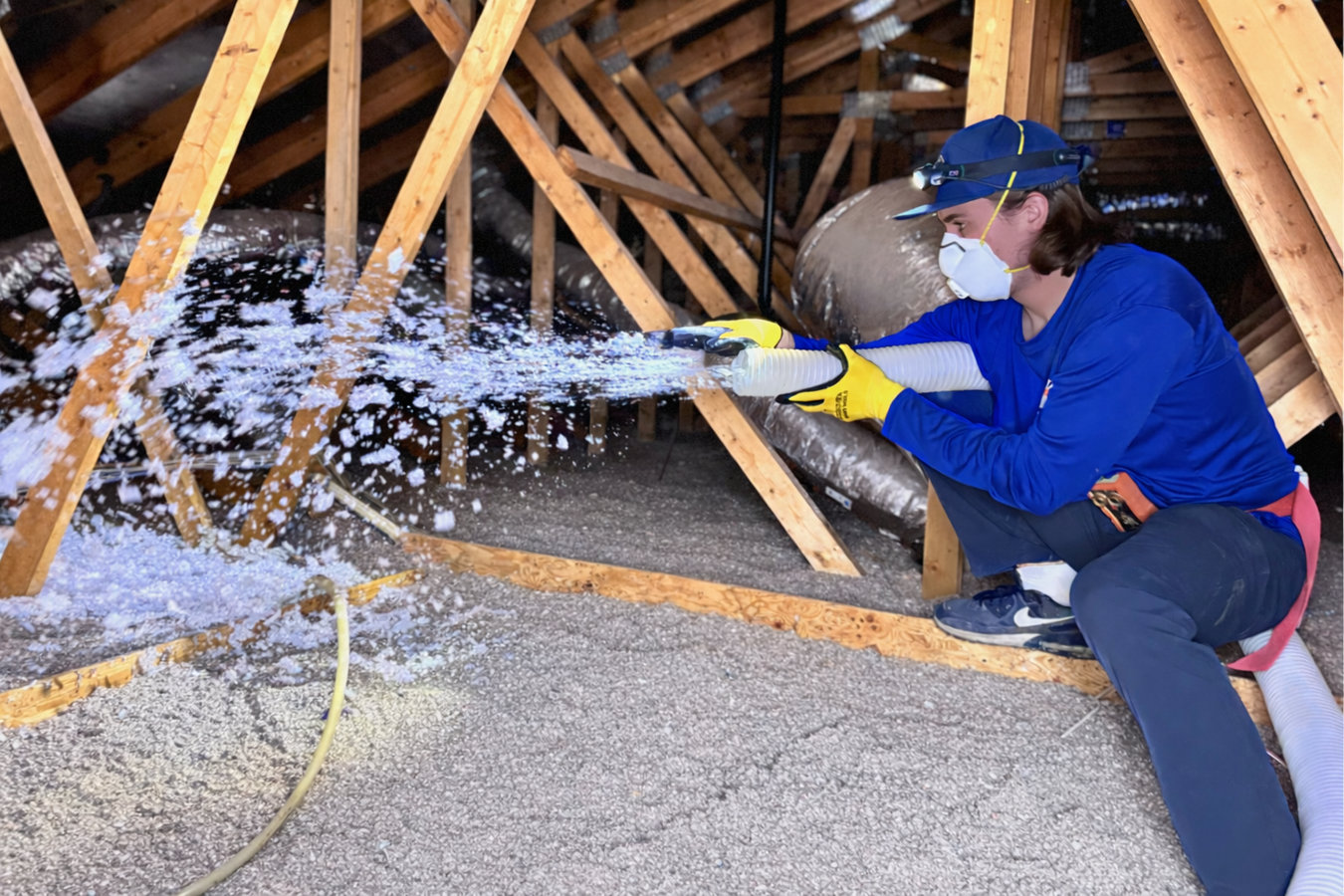
Abilene Insulation Company provides insulation contractor services throughout Snyder, TX, including attic insulation, blown-in upgrades, and air sealing for homes across Scurry County. We have completed jobs throughout Snyder and document every install to TDLR certification standards. We respond to all Snyder inquiries within one business day.
Matched to Scurry County's building stock, climate, and property types.
Snyder sits on the open Llano Estacado where summer attic temperatures routinely reach 140°F or higher under an unshaded roof. Homes built during the 1950s oil boom expansion — the era that doubled Snyder's population almost overnight — typically have R-11 or less in the attic, a fraction of the R-38 that current Texas code requires. Upgrading to R-38 is the highest-return single improvement available to most Scurry County homeowners.
Blown-in cellulose or fiberglass installs over existing material without tearing out what is already there, fills around irregular framing, and reaches low-clearance areas near the eaves where batts cannot lay flat. For the ranch-style wood-frame homes common in Snyder's mid-century neighborhoods, blown-in is usually the fastest and cleanest path to hitting modern R-value targets in a single day.
On the open West Texas plains, wind does not just raise your heating bill — it forces outside air through every gap in the ceiling plane around plumbing chases, electrical boxes, and recessed lights. Sealing these penetrations before blown-in insulation is installed is the difference between a job that performs as expected and one that underdelivers from the first summer. On a windy day in Snyder, an unsealed attic floor is a meaningful thermal liability.
Closed-cell spray foam applied to the underside of the roof deck converts a vented attic into a conditioned space, bringing any ductwork inside the thermal envelope and protecting it from 150°F peak summer conditions. For Snyder homes with HVAC equipment or ducts in the attic, this approach eliminates the duct losses that can waste 20 to 30 percent of cooling energy before it ever reaches the living area.
Texas had no statewide residential energy code before 2001. Every Snyder home built before that date was constructed without a minimum insulation requirement. Dense-pack blown-in into existing wall cavities — drilled through small access holes — is a practical retrofit that adds real thermal resistance to closed walls without opening finished surfaces or disturbing exterior brick and siding.
Snyder's housing stock has a particular insulation problem that traces directly to its history. When oil was discovered in the Canyon Reef formation north of town in 1948, Scurry County's population nearly tripled in a few years. Thousands of homes were built quickly to house workers flooding into what became one of Texas's most productive oilfields. Speed, not energy performance, drove construction decisions in that era. The result is a large share of older housing built with minimal attic insulation and empty wall cavities — conditions that made little difference when energy was cheap but create real financial pain today.
The climate compounds the problem. Snyder sits on the Southwestern Tablelands in IECC Climate Zone 3, averaging summer highs well above 95°F and seeing more than 50 days a year above 100°F. At the same time, the area gets periodic hard freezes when Arctic air pushes across the Rolling Plains — the kind of dual-direction thermal demand that insulation at R-11 simply cannot handle. Every degree of delta between outside and inside temperatures is working against a home that has never been properly sealed.
Wind is a factor that outsiders often underestimate. Snyder's flat, open terrain on the southern edge of the Llano Estacado channels sustained winds with no natural windbreak. This drives air infiltration through aging construction that batted insulation alone cannot stop — a condition that closed-cell spray foam or thorough pre-insulation air sealing addresses directly.
Scurry County also has a significant share of rural properties outside the city limits, including manufactured housing and older frame construction on country lots between Snyder and surrounding communities. These homes are often the most under-insulated and the most exposed to both extreme summer heat and winter freeze events that push aging HVAC systems to their limits.
We route permit paperwork for Snyder jobs through the City of Snyder's building department, which operates on a separate review cycle from Taylor County and has its own inspection scheduling process. For spray foam projects that require a permit — conditioned attic conversions, in particular — we handle that coordination before work begins so the homeowner is not managing it alone. The older wood-frame homes in the neighborhoods south of the Scurry County Courthouse and east of College Avenue tend to have the tightest attic clearances and the most age-related insulation degradation we encounter in this market.
US-84 from Abilene to Snyder is the primary corridor our crew travels, a straight 87-mile run east across the Rolling Plains. The campus of Western Texas College on College Avenue is a useful orientation point for the east side of town, and the Scurry County Courthouse square on 26th Street anchors the older residential streets in the center of the city where much of our work happens. Properties near the courthouse tend to be 1940s to 1960s construction — precisely the homes that need the most attention.
We also serve customers in Sweetwater to the west along I-20, where similar oil-boom-era housing conditions exist, and in communities across Scurry County between Snyder and the surrounding plains. Customers southeast of Snyder looking for shorter-haul service can also reach us through our Abilene base.
Reach us by phone or through the online estimate form. We respond to all Snyder area inquiries within one business day — same day for calls during business hours. No automated scheduling or hold queues.
A crew member visits your home, checks the attic, walls, and any crawl space, measures existing insulation depth, and provides a written estimate with specific R-value targets and material choices. The visit is free and carries no obligation.
Cost is confirmed in writing before any work begins. If a permit is required by the City of Snyder, we handle submission before the job starts. Most Scurry County residential jobs are scheduled within the same week as the estimate.
After installation, a TDLR-required certification is posted in the attic listing the insulation material, manufacturer, installed thickness, and achieved R-value. That document satisfies inspection requirements and provides a record for insurance, resale, and any future energy audits.
We respond to Snyder and Scurry County inquiries within one business day. The on-site estimate is free and carries no obligation. After you reach out, we confirm a visit time, inspect the home, and provide a written quote before any work begins.
(325) 283-1586Snyder is the county seat of Scurry County, with a population of approximately 11,400 residents recorded at the 2020 Census. The city sits at the junction of US Highways 84 and 180 on the Southwestern Tablelands of West Texas, about 87 miles southeast of Lubbock. Its civic identity centers on the Scurry County Courthouse square and its bronze statue of a white buffalo — a symbol tied to the city's founding as a trading post established by William Henry Snyder in 1878, when hide-hunters and traders camped along Deep Creek. The early settlement earned nicknames like "Hide Town" for its rough frontier character before the railroad arrived and commerce stabilized.
The discovery of oil in the Canyon Reef formation north of Snyder in 1948 transformed the city almost overnight, swelling the population from roughly 4,000 to more than 12,000 in just a few years and producing one of the most productive oilfields in Texas history. The residential landscape that rapid growth created — blocks of wood-frame ranch homes and modest brick construction built quickly to house an energy workforce — defines the housing stock that most insulation work in Snyder addresses today. Wind energy has since joined oil and gas as a major economic pillar, and Scurry County farmland and pastureland stretch in every direction from the city limits.
Western Texas College, founded in 1971 on College Avenue, anchors the east side of Snyder and draws students from across the region. The Scurry County Coliseum, operated by WTC, seats 3,800 and hosts athletic events and regional gatherings year-round. The Heritage Village on the WTC campus preserves structures and exhibits from the county's ranching and oil history. Downtown Snyder, concentrated on the courthouse square and the 26th Street corridor, supports the Ritz Community Theatre — operating continuously since 1992 — and the retail and service businesses that make Snyder the commercial hub for all of Scurry County.
Homeowners across Snyder's established neighborhoods, from the streets near downtown west through the residential blocks built during the oil boom years, are the customers we work with most in this market. We also regularly serve customers in Sweetwater to the southwest, where Nolan County homes face many of the same wind exposure and aging construction challenges seen throughout this part of West Texas.
Spray foam seals air gaps and adds R-value in one application, making it one of the most effective options for attics, walls, and crawl spaces.
Learn moreProper attic insulation is the single biggest factor in keeping your home comfortable and your energy bills predictable year-round.
Learn moreBlown-in insulation reaches tight corners and irregular cavities that batts cannot, delivering consistent coverage across large areas quickly.
Learn moreWhole-home insulation assessments identify the weakest points in your building envelope and address them with the right materials.
Learn moreOld, compressed, or contaminated insulation reduces performance; removal clears the way for a fresh, properly installed system.
Learn moreInsulating the crawl space floor or walls keeps moisture and cold air from migrating into the living areas above.
Learn moreWall insulation reduces heat transfer through the building envelope and lowers the load on heating and cooling equipment.
Learn moreAir sealing closes the gaps, cracks, and penetrations where conditioned air escapes and outside air enters uncontrolled.
Learn moreBasement insulation stabilizes temperatures in the lowest level of the home and prevents cold floors from pulling heat out of the rooms above.
Learn moreClosed-cell foam provides the highest R-value per inch available and acts as both an air and vapor barrier in a single layer.
Learn moreOpen-cell foam is a cost-effective choice for interior walls and attics where a vapor-permeable, sound-dampening material is preferred.
Learn moreSealing the attic floor before adding insulation prevents stack-effect air movement and dramatically improves overall thermal performance.
Learn moreA vapor barrier installed on the crawl space ground stops ground moisture from rising into floor framing and living areas.
Learn moreVapor barrier installation protects wall assemblies and below-grade spaces from moisture accumulation that leads to mold and structural decay.
Learn moreRetrofit insulation adds thermal protection to existing walls and attics without requiring full demolition or major reconstruction.
Learn moreCommercial insulation solutions for warehouses, office buildings, and industrial facilities reduce operating costs and improve occupant comfort.
Learn moreServing these cities and communities.
Most Scurry County jobs are scheduled within the same week of the initial free on-site visit.