
Loading...
Serving Abilene, TX and surrounding areas(325) 283-1586
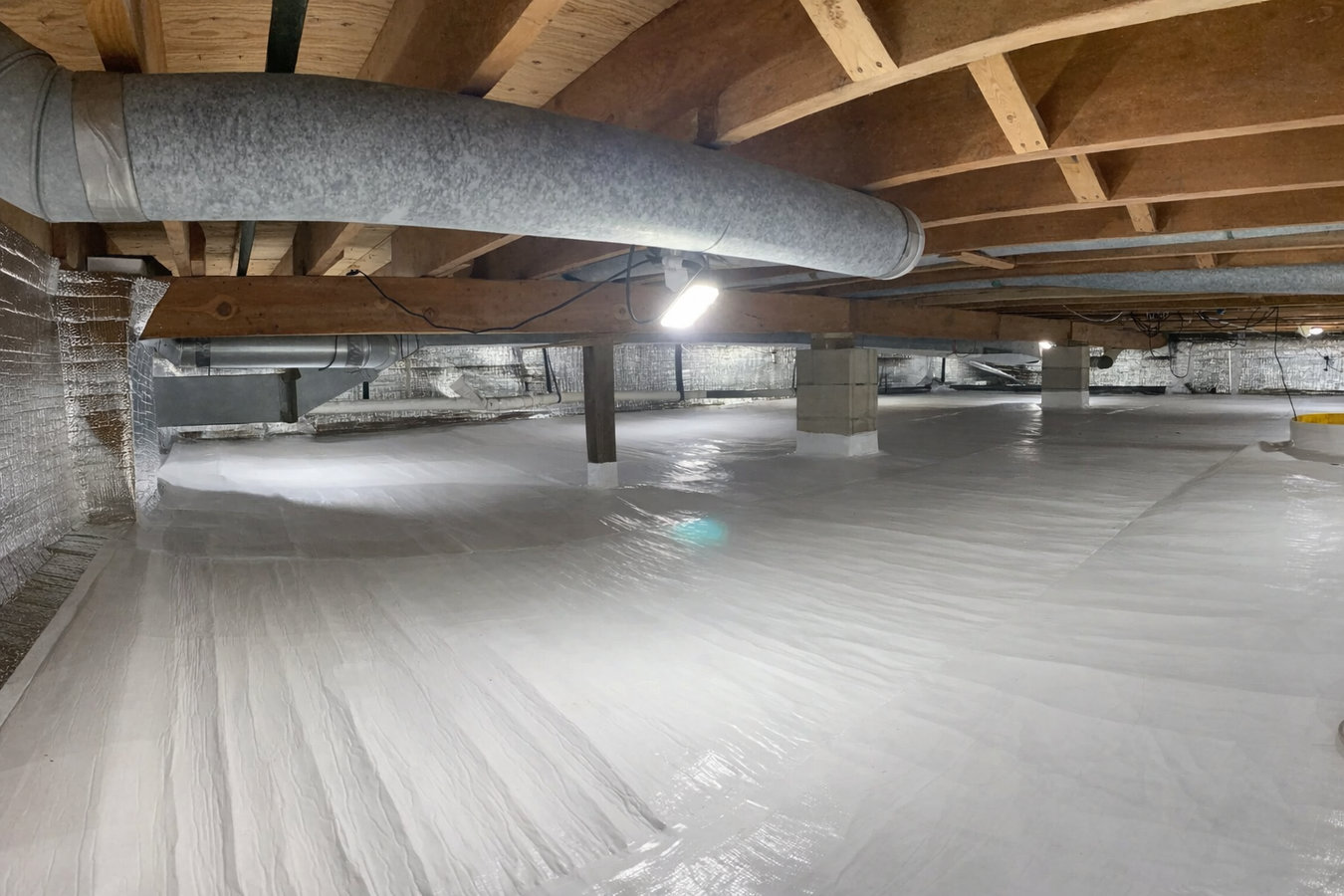
Abilene Insulation Company serves Cisco, TX with crawl space insulation, vapor barriers, attic upgrades, and air sealing for Eastland County homeowners. Cisco's owner-occupied housing stock is predominantly mid-twentieth-century construction sitting on pier-and-beam foundations — the building type most likely to have inadequate crawl space coverage, missing vapor barriers, and sub-code attic insulation. We have served homeowners along the I-20 corridor since 2022 and respond to all Cisco inquiries within one business day.
Matched to the pier-and-beam foundations, older housing stock, and I-20 corridor climate that define Cisco's residential market.
A large share of Cisco's owner-occupied homes sit on pier-and-beam foundations with open, uninsulated crawl spaces. That gap between the floor joists and the ground lets outdoor temperature extremes reach directly into the living space above — pushing up cooling loads in summer and floor-level discomfort in winter. Insulating the floor assembly with batts or rigid foam, combined with a ground-cover vapor barrier, addresses both the thermal and moisture problems that open crawl spaces create in Eastland County's climate.
Late-summer Gulf moisture surges are a reality along the I-20 corridor — brief but intense periods when relative humidity spikes and unprotected crawl spaces accumulate condensation on cold floor framing and ductwork. A continuous Class I vapor retarder covering the ground surface and sealed up the perimeter walls stops soil moisture migration at the source, protecting the subfloor structure and HVAC equipment that many Cisco homes carry in the crawl space. It is the first step before any insulation goes in.
Cisco sits in IECC Climate Zone 3, where the code minimum for residential attic insulation is R-38. Homes built before Texas adopted a statewide energy code in 2001 — which covers most of Cisco's housing stock — commonly have R-11 to R-19 in the attic. With summer highs regularly reaching 100°F or more along the I-20 corridor, that gap translates into an air conditioner that runs longer and costs more than it should through a six-month cooling season.
Cisco's position along the open I-20 corridor means consistent west wind that finds gaps in every older building envelope. Unsealed top plates, recessed light cans, plumbing penetrations, and attic hatch perimeters all act as bypass points where conditioned air escapes. Sealing those penetrations before blown-in insulation is installed is what determines whether R-38 in the attic performs on paper and in the actual monthly utility bill.
Blown-in cellulose or fiberglass is the standard attic upgrade for Cisco homes that need more coverage without disturbing finished ceilings. It fills irregular joist bays from older framing, covers the full attic floor edge to edge, and installs over whatever material is already in place. For Cisco properties where the original batts have shifted, settled, or been disturbed by pest activity, blown-in over the top restores full coverage in a single day.
With 64.9% of Cisco's housing units owner-occupied and a median housing age that skews solidly pre-code, retrofit insulation work is the most common job type we do in Eastland County. Whether that means a blown-in attic top-off, crawl space floor batts, a new vapor barrier, or dense-pack wall insulation through small access holes in older framing — none of these approaches requires opening finished walls or ceilings, and all of them can be scoped and completed in a single assessment and installation visit.
Cisco is a small city of about 3,883 residents in northwestern Eastland County, with 1,464 households and a 64.9% owner-occupancy rate. Interstate 20 passes along the south edge of the city, and US-183 and Texas State Highway 6 converge in the city center — a crossroads location that has defined Cisco as a regional stop along a busy freight and commuter corridor since the railroad era. That working-class, owner-occupied character translates to a housing inventory that skews older and has seen less renovation activity than larger metro markets.
The dominant demand driver for insulation work in Cisco is the same one found across the Big Country region: homes built before 2001 that were constructed without a Texas statewide energy code and have not been upgraded since. A significant share of Cisco's 1,803 housing units dates from the post-WWII era through the 1970s — a period when pier-and-beam foundations were standard, attic insulation levels were minimal, and crawl spaces were left open and unprotected. The IECC Climate Zone 3 minimum of R-38 in attics and R-19 in crawl space floor assemblies is far above what most of these properties currently carry.
Cisco's climate on the I-20 corridor is demanding in ways that compound the insulation problem. Summer temperatures routinely exceed 100°F from late June through August. In late summer, Gulf moisture surges create temporary but significant humidity spikes that drive condensation into unprotected crawl spaces and onto cold ductwork. Winter cold fronts periodically push temperatures well below freezing — the February 2021 event hit this region hard — meaning the insulation system has to perform effectively at both extremes of the year.
The oil, gas, and peanut agriculture economy of Eastland County also means a share of properties outside the city include older farmhouses, rural residences, and county-road addresses where crawl space and attic conditions have not been assessed in decades. The same insulation deficits common in Cisco's in-town neighborhoods exist in greater degree in those rural properties.
We reach Cisco from our Abilene base by heading east on I-20, a 45-mile run along the same corridor Cisco has occupied since it was known as the "Gate City of the West" during the railroad era. Cisco sits at Exits 330 and 332 off I-20, and Conrad Hilton Boulevard — named for the man who bought the Mobley Hotel in Cisco in 1919 and launched what became the global Hilton Hotels chain — is the main street through the commercial center. The jobs we do in Cisco are primarily in the residential neighborhoods north of I-20, where the older pier-and-beam housing stock is concentrated.
One pattern that comes up repeatedly in Cisco crawl space work: homes with HVAC ducts running through the crawl space that have never had insulation below the floor joists. By the time we arrive for an assessment, the ducts are often sweating condensation residue visible on the exterior of the ductwork — a direct sign that the summer temperature differential between the duct surface and the surrounding crawl space air is high enough to cause moisture problems. That is not a surprise given that an open, uninsulated Cisco crawl space on a 100°F day can easily reach internal temperatures above ambient. We address the full crawl space scope — vapor barrier first, then insulation — before closing it back up.
The I-20 corridor puts Cisco between Abilene to the west and the Stephenville area to the east. We regularly serve homeowners on the western segment of this run, including communities between Cisco and Clyde in Callahan County, which we reach from the opposite direction out of Abilene. The Conrad Hilton Center on Conrad Hilton Boulevard — the free museum housed in the original 1919 Mobley Hotel — is the best-known local landmark and a reliable geographic anchor when we are giving homeowners directions to the address for the assessment visit.
Reach out by phone or through the online form on this site. We respond to all Cisco and Eastland County inquiries within one business day. For calls made during business hours, a same-day reply is typical. We ask only what property type it is and the best time to schedule a visit.
A crew member inspects the crawl space for moisture conditions, missing vapor barrier, and floor insulation coverage; checks the attic for current R-value and identifies air sealing needs. You receive a written estimate covering specific materials and R-value targets. The assessment is free with no obligation.
The price is confirmed in writing before work begins. If your scope requires a permit from the City of Cisco, we handle the submission. Most Eastland County jobs are scheduled within the same week as the estimate visit, and you receive a specific installation date.
After installation, a Texas TDLR certificate is left on-site specifying insulation type, manufacturer, installed depth, and R-value. That document satisfies inspection requirements, supports a federal IRS 25C energy credit claim, and provides a clear record for any future home sale or insurance disclosure.
We respond to Cisco and Eastland County inquiries within one business day. The on-site assessment covers the crawl space, attic, and any air sealing concerns — free with no obligation. After you reach out, we confirm a visit time and provide a written estimate before any work begins.
(325) 283-1586Cisco is a city of about 3,883 in northwestern Eastland County, sitting at the intersection of Interstate 20 and US-183. The city is best known nationally as the place where Conrad Hilton bought the Mobley Hotel in 1919 — a purchase made on impulse when the asking price of a local bank proved too high — and launched what grew into the global Hilton Hotels chain. The original Mobley building at 309 Conrad Hilton Boulevard now operates as the Conrad Hilton Center, a free museum with five galleries including exhibits on the hotel's history and the infamous 1927 Santa Claus Bank Robbery.
The residential mix in Cisco is predominantly single-story wood-frame homes, with pier-and-beam foundations common in the older neighborhoods north of I-20 and east of Conrad Hilton Boulevard. The city's 1,803 housing units are 64.9% owner-occupied — a high rate that reflects a stable, long-term resident community with properties that have often been in the same family for decades. That ownership pattern also means insulation upgrades tend to be long-deferred; the original coverage from the 1950s, 1960s, and 1970s build era is frequently still the only coverage in place.
Cisco College, a two-year institution founded in 1940 whose Crawford Theatre serves as the city's primary public performance venue, gives the community a cultural anchor beyond what most small cities its size can offer. Lake Cisco, a cross-shaped reservoir a few miles north of the city built in the 1920s with over 1,000 acres of surface area, provides fishing and recreation for local residents. The annual Cisco TX Pie Fest each October closes Conrad Hilton Boulevard to traffic for a pie-baking competition, food vendors, and community gathering — one of those distinctly small-town events that says more about a community's character than any demographic profile.
Cisco sits 45 miles east of Abilene along I-20 and connects westward through Callahan County to communities like Clyde, where we also serve homeowners regularly. The Eastland County housing stock along this corridor shares much of the same construction vintage and insulation history as Cisco itself — older single-family homes on pier-and-beam foundations with limited original coverage that has never been upgraded.
Spray foam seals air gaps and adds R-value in one application, making it one of the most effective options for attics, walls, and crawl spaces.
Learn moreProper attic insulation is the single biggest factor in keeping your home comfortable and your energy bills predictable year-round.
Learn moreBlown-in insulation reaches tight corners and irregular cavities that batts cannot, delivering consistent coverage across large areas quickly.
Learn moreWhole-home insulation assessments identify the weakest points in your building envelope and address them with the right materials.
Learn moreOld, compressed, or contaminated insulation reduces performance; removal clears the way for a fresh, properly installed system.
Learn moreInsulating the crawl space floor or walls keeps moisture and cold air from migrating into the living areas above.
Learn moreWall insulation reduces heat transfer through the building envelope and lowers the load on heating and cooling equipment.
Learn moreAir sealing closes the gaps, cracks, and penetrations where conditioned air escapes and outside air enters uncontrolled.
Learn moreBasement insulation stabilizes temperatures in the lowest level of the home and prevents cold floors from pulling heat out of the rooms above.
Learn moreClosed-cell foam provides the highest R-value per inch available and acts as both an air and vapor barrier in a single layer.
Learn moreOpen-cell foam is a cost-effective choice for interior walls and attics where a vapor-permeable, sound-dampening material is preferred.
Learn moreSealing the attic floor before adding insulation prevents stack-effect air movement and dramatically improves overall thermal performance.
Learn moreA vapor barrier installed on the crawl space ground stops ground moisture from rising into floor framing and living areas.
Learn moreVapor barrier installation protects wall assemblies and below-grade spaces from moisture accumulation that leads to mold and structural decay.
Learn moreRetrofit insulation adds thermal protection to existing walls and attics without requiring full demolition or major reconstruction.
Learn moreCommercial insulation solutions for warehouses, office buildings, and industrial facilities reduce operating costs and improve occupant comfort.
Learn moreServing these cities and communities.
Most Eastland County jobs are on the calendar within the same week as the free on-site crawl space and attic assessment.