Loading...
Serving Abilene, TX and surrounding areas. (325) 283-1586
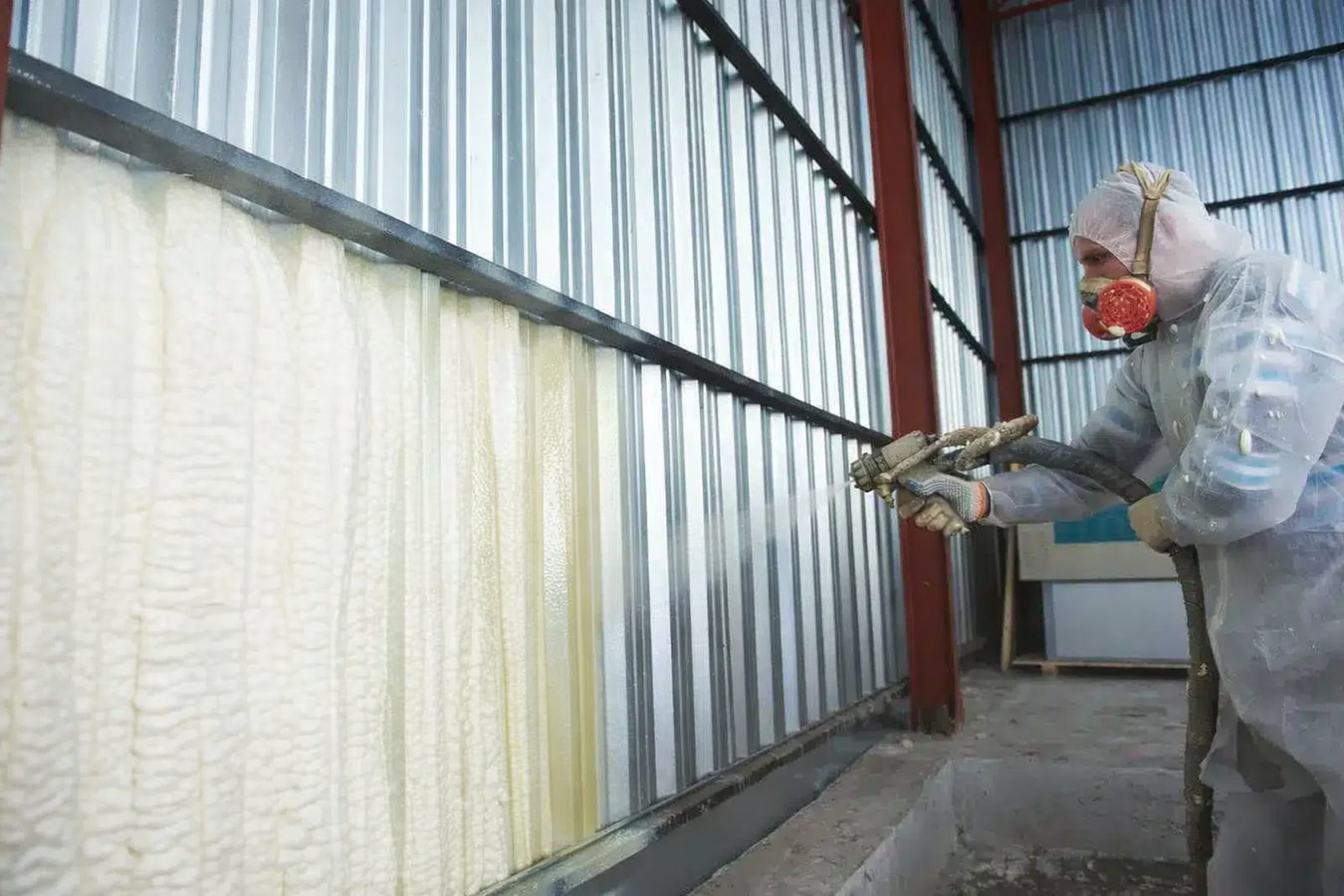
Abilene's summers push past 100 degrees for months on end. If your commercial building is not properly insulated, your HVAC system pays the price every single day. We install commercial insulation that keeps the heat out and your energy bills manageable.
Commercial insulation in Abilene slows heat from moving through your building's walls, roof, and floors so your HVAC system does not have to fight outdoor temperatures all day. Most straightforward commercial jobs, such as a single-story office or retail space, are completed in one to three days with minimal disruption to your operations.
A significant portion of Abilene's commercial buildings were constructed in the 1960s through 1980s under standards far less demanding than what is used today. Many were built with minimal wall insulation and little attention to the building envelope. If your building falls in that age range, there is a good chance it is losing a meaningful amount of energy through the roof and walls every month of the year. This work complements the same improvements we handle for homeowners through our spray foam insulation services, using the same materials and techniques scaled for commercial spaces.
The North American Insulation Manufacturers Association provides installation quality standards that cover commercial applications. A contractor familiar with those guidelines is working to a recognized professional standard, not just their own judgment.
If your electricity costs jump sharply from May through September and seem to get worse each year, your building's insulation may no longer be doing its job. In Abilene, where summer temperatures regularly push past 100 degrees, a well-insulated building should hold its temperature reasonably well even on the hottest days. If your HVAC runs almost constantly and the space still feels warm, insulation is a likely culprit.
West Texas wind carries fine dust, and if you are finding it accumulating inside your building despite keeping doors and windows shut, outside air is getting in somewhere. Gaps in insulation and the building envelope are a common entry point. This is both a comfort issue and a sign that your building is exchanging far more air with the outside than it should be.
Rooms or areas that are noticeably hotter or colder than others often point to inconsistent or missing insulation in specific zones, a west-facing wall, a section of roof that gets direct afternoon sun, or a corner that was never properly insulated during construction. If employees or customers avoid certain parts of your building because of temperature, that is worth investigating.
Many of Abilene's commercial buildings from the 1970s and 1980s were built to standards significantly below what is recommended today. Insulation also settles, compresses, and degrades over time, especially in attic spaces that experience extreme heat cycles. If you have owned or occupied the building for years and nobody has ever assessed the insulation, it is likely underperforming.
We work on commercial buildings ranging from small retail spaces and offices to larger warehouses and multi-unit properties. Our process starts with an on-site assessment where we walk the building and identify the areas most likely to be losing energy: the attic, exterior walls, crawl space if one exists, and any mechanical rooms. We may use a thermal camera to spot heat loss that is not visible to the naked eye. The assessment visit typically takes one to two hours, and you should feel free to ask questions throughout.
After the assessment, you receive a written estimate that breaks down what work is recommended, what materials will be used, and the total cost. Spray foam is our first recommendation for attic spaces and the building envelope because it both insulates and seals air gaps simultaneously. Abilene's persistent wind makes air sealing as critical as the insulation material itself. For older buildings, we also pair commercial insulation work with wall insulation when wall cavities have been left empty or have degraded material from the original construction era.
If your project requires a City of Abilene building permit, we handle the application on your behalf. A permitted job gets an independent city inspection, which gives you documentation that the work was completed to current standards. That paperwork matters if you ever refinance, sell, or lease the building. The Spray Polyurethane Foam Alliance provides training standards for contractors applying spray foam in commercial applications, covering both performance and indoor air quality.
Best for most Abilene commercial buildings where the roof plane is the primary source of summer heat gain.
Suited for flat roof assemblies and exterior wall applications in single-story office and retail buildings.
For older Abilene commercial buildings from the 1960s and 1970s with empty or degraded wall insulation.
For buildings on pier-and-beam or raised foundations, where heat and cold enter from below and floor performance matters.
Abilene's cooling season stretches from late April through October, with temperatures regularly exceeding 100 degrees in July and August. That means your commercial building's insulation is working against intense heat for more than half the year. If it is underperforming, that cost shows up every single month on your energy bill. Upgrading insulation here pays off faster than in milder climates because the demand on your HVAC system is relentless and continuous.
Abilene's persistent West Texas wind adds another dimension. Wind-driven air infiltrates through every gap in a building's envelope, and older insulation that has settled and left gaps invites that outside air straight in. A quality commercial insulation job in this climate requires careful attention to air sealing alongside the insulation material. Parts of Abilene also sit on caliche-heavy soil, which affects how some older buildings were constructed, including crawl space and pier-and-beam foundations that are common in Taylor County commercial properties.
We handle commercial insulation projects throughout Abilene, Killeen, and Midland. If your building is older than 20 years and has never had an insulation inspection, we can walk it with you and tell you honestly where things stand.
When you call or submit a request, we reply within one business day to schedule a free on-site assessment. We ask a few basic questions about your building size, age, and what is prompting your call so we can come prepared. You should expect an estimate visit within a few business days.
We walk through the building and assess the attic, exterior walls, crawl space if present, and mechanical rooms. We may use a thermal camera to identify heat loss that is not visible to the naked eye. The visit typically takes one to two hours and you are encouraged to ask questions throughout.
You receive a written estimate that breaks down recommended work, materials, and cost. If a permit is required, we explain it and handle the application on your behalf. Do not sign anything until you have compared at least two estimates from local contractors.
The crew arrives, sections off work areas, and completes the job, typically in one to three days. When done, we walk you through every area that was insulated. We handle all cleanup and coordinate the city inspection appointment if a permit was pulled.
Free on-site assessment, written estimate, no obligation. We reply within one business day.
(325) 283-1586We work in Abilene's older commercial building stock regularly and understand what to expect in structures from the 1960s and 1970s. That local knowledge means our assessments are accurate and our quotes do not change after we start the job.
When a project requires a City of Abilene building permit, we manage the application and coordinate the inspector visit. You should never have to navigate that process yourself, and a contractor who skips required permits is cutting a corner that creates problems for you if you ever sell or refinance the building.
We do not install insulation on top of gaps and call it done. Air sealing is part of our standard process because West Texas wind means unsealed gaps in the building envelope are a constant source of energy loss. The two work together and that is how we approach every commercial project.
Every project starts with a free on-site assessment and a written estimate that breaks down materials, labor, and scope. We serve commercial customers in Abilene, Killeen, and Midland, and our pricing reflects local contractor market conditions rather than rates built for larger Texas cities.
Proper commercial insulation in Abilene's climate is not a luxury. When your building is correctly insulated and air-sealed, your HVAC system runs fewer hours to maintain a comfortable interior, your employees and customers are more comfortable, and your energy statement stops being the biggest line item in your operating costs. That is the outcome we deliver, and we back it with a thorough on-site process rather than a phone quote.
High-performance spray foam that insulates and air-seals in one step, ideal for commercial attics and envelope applications in West Texas heat.
Learn moreDense-pack and batt insulation for exterior wall cavities in commercial buildings where heat enters through the walls, not just the roof.
Learn moreEvery week without proper insulation is money leaving through your roof. Call today or submit your request online and we will schedule your on-site visit within one business day.