Loading...
Serving Abilene, TX and surrounding areas. (325) 283-1586
Abilene's temperature swings hit your basement hard. Proper insulation stops heat from moving through your floors, keeps energy costs down, and protects against the moisture problems that follow every heavy rain.
Basement insulation in Abilene slows heat movement between your basement and the rest of your home, keeping floors comfortable and your heating and cooling system from working overtime. Most jobs in an average-sized home take one to two days, and homeowners often feel the difference before the next billing cycle.
In Abilene, where summer highs push past 100 degrees and winter lows can dip into the 20s, that temperature buffer matters in both directions. An uninsulated basement lets heat push up through your floors in July and lets warmth escape through cold concrete walls in January. Many homeowners discover this problem only after comparing their electric bills to neighbors with similar-sized homes.
Basement insulation also works best when it is paired with proper air sealing and, in some cases, moisture control. If your home has a crawl space rather than a full basement, our crawl space insulation service addresses the same heat-transfer problem through a different approach suited to that space.
If the first floor feels cold underfoot in January or uncomfortably warm in July, heat is moving through the floor from the basement below. This is one of the clearest signs that the space beneath your feet is not insulated, or that whatever is there has failed. In Abilene, where winters can dip into the 20s and summers push past 100 degrees, this temperature transfer is hard to miss.
An uninsulated basement allows heat to radiate upward through your floors and forces your air conditioner to run longer. If your cooling bills seem high compared to neighbors with similar-sized homes, or if they have been climbing year over year, poor basement insulation is one of the first things worth checking. Many Abilene homeowners notice this pattern without connecting it to their basement.
That chalky residue on concrete walls is called efflorescence. It signals that water has been moving through the concrete and depositing minerals on the surface. In Abilene, this appears after the heavy rain bursts that come with spring storms. It does not mean flooding, but it does mean moisture is present and will damage insulation if installed over an unsealed wall.
Walk through your basement and look where pipes, wires, and ducts pass through the walls or ceiling. If you can see light coming through, feel air moving, or spot obvious gaps, those openings let conditioned air out and outside air in. These spots should be sealed before any insulation goes in, since they account for a large share of the heat loss.
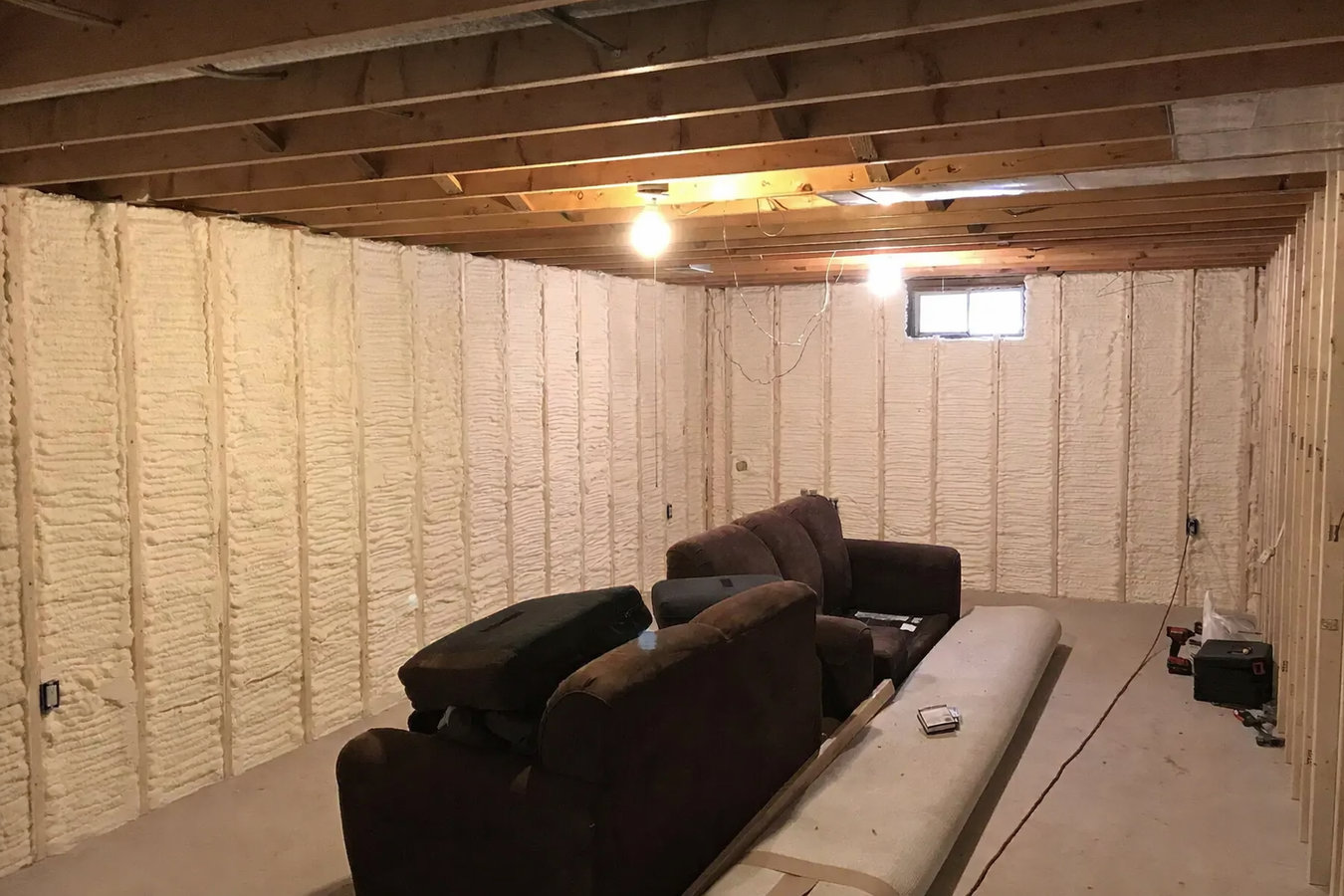
We insulate basement walls, basement ceilings, and the spaces around penetrations, using the material best suited to your home's specific conditions. For most Abilene basements, we recommend closed-cell foam insulation on the walls because it insulates and acts as a moisture barrier at the same time. That dual function matters in a climate where heavy rains push moisture against foundation walls and clay soil expands and contracts with every wet-dry cycle.
Rigid foam boards are a cost-effective alternative for homeowners who want solid performance without the higher per-square-foot cost of spray foam. We also handle the air sealing work that should precede any insulation installation: sealing gaps around pipes, wires, and utility penetrations before the insulation goes in. Skipping that step is the most common reason basement insulation underdelivers.
Every job starts with a free on-site assessment. We look at the walls, the existing conditions, any signs of moisture, and what is already there before recommending anything. No quote is given without seeing your basement first.
Best for finished or planned-to-be-finished basements where you want the space to feel like the rest of the house.
Suited for unfinished basements where the goal is simply to stop cold from affecting the floors above.
Ideal for basements with any history of moisture, or where the wall material needs an integrated vapor barrier.
A practical option for homeowners who want good insulation performance at a lower material cost per square foot.
Basements are uncommon in West Texas, but Abilene does have them, mostly in older homes built before slab-on-grade construction became standard. Many of these basements, particularly in established neighborhoods near the historic district and Elmwood, have never been insulated to modern standards. If your home was built before the 1970s and has a basement, the odds are high that heat and moisture are moving through those walls unchecked.
Taylor County's expansive clay soil makes the situation more complex. That soil swells when wet and shrinks when dry, creating a cycle that slowly opens cracks in basement walls. Those cracks become pathways for both air and moisture, and they need to be sealed before insulation goes in. A contractor who skips that step and just installs material is setting you up for a moisture problem you cannot see.
We serve homeowners in Abilene, Brownwood, and Stephenville with the same standards on every job. The U.S. Department of Energy's guidance on basement insulation is a useful reference if you want to understand the full range of options before we meet.
Reach out by phone or through our contact form. We respond within 1 business day and ask a few basic questions about your basement and any moisture history, so we can arrive prepared.
We walk through your basement, look at the walls and ceiling, check for moisture signs or cracks, and review any existing insulation. This visit is free and takes about 30 to 45 minutes. No quote without seeing the space first.
After the assessment, you receive a written estimate that spells out the material, scope, total cost, and whether air sealing is included. Take your time. We do not pressure anyone to sign on the spot.
The crew seals gaps first, then installs the insulation. Most jobs wrap up in one to two days. Before leaving, we walk you through the finished work so you can see every covered wall and ask any remaining questions.
Free on-site estimate. Written quote before any work begins. No pressure, no obligation.
(325) 283-1586No basement insulation estimate leaves our hands without a walk-through first. Taylor County clay soil creates wall cracks that look minor but let moisture through, and we find those before a quote is written, not after the material is in.
Insulation without air sealing is only half the solution. The U.S. Department of Energy estimates that air sealing and insulation together can cut heating and cooling costs significantly more than insulation alone. We seal every gap around pipes, wires, and penetrations before any material goes in.
We have worked on homes throughout Abilene and across the region since 2022. That means familiarity with the clay soil conditions, older housing stock, and seasonal extremes that shape what basement insulation needs to do here.
We coordinate and pull any required permits before work begins. Permitted work is inspected, which gives you a clear record if you ever sell the home or need to verify what was done. We hand you the paperwork when the job is complete.
Every one of those points comes down to the same thing: you should be able to see exactly what was done and understand why it will hold up. We are local, we are experienced, and we do not cut corners on the prep work that separates a long-lasting job from one that disappoints.
The most moisture-resistant insulation option for basement walls, combining thermal performance with a built-in vapor barrier.
Learn moreFor homes without a full basement, crawl space insulation addresses the same floor-level heat transfer in a pier-and-beam foundation.
Learn moreAbilene summers are unforgiving. A free on-site estimate costs nothing, and knowing what your basement needs puts you ahead of the heat.