Loading...
Serving Abilene, TX and surrounding areas. (325) 283-1586
Abilene Insulation Company provides insulation contractor services throughout Lubbock, TX, including spray foam insulation, attic insulation, and wall insulation. We have served West Texas homeowners since 2022 and understand how persistent Caprock wind, summer temperatures above 90 degrees Fahrenheit, and shrink-swell clay soil combine to wear down the thermal envelope of a Lubbock home faster than most homeowners realize.
Abilene Insulation Company provides insulation contractor services throughout Lubbock, TX, including spray foam insulation, attic insulation, and wall insulation. We have served West Texas homeowners since 2022 and understand how persistent Caprock wind, summer temperatures above 90 degrees Fahrenheit, and shrink-swell clay soil combine to wear down the thermal envelope of a Lubbock home faster than most homeowners realize.
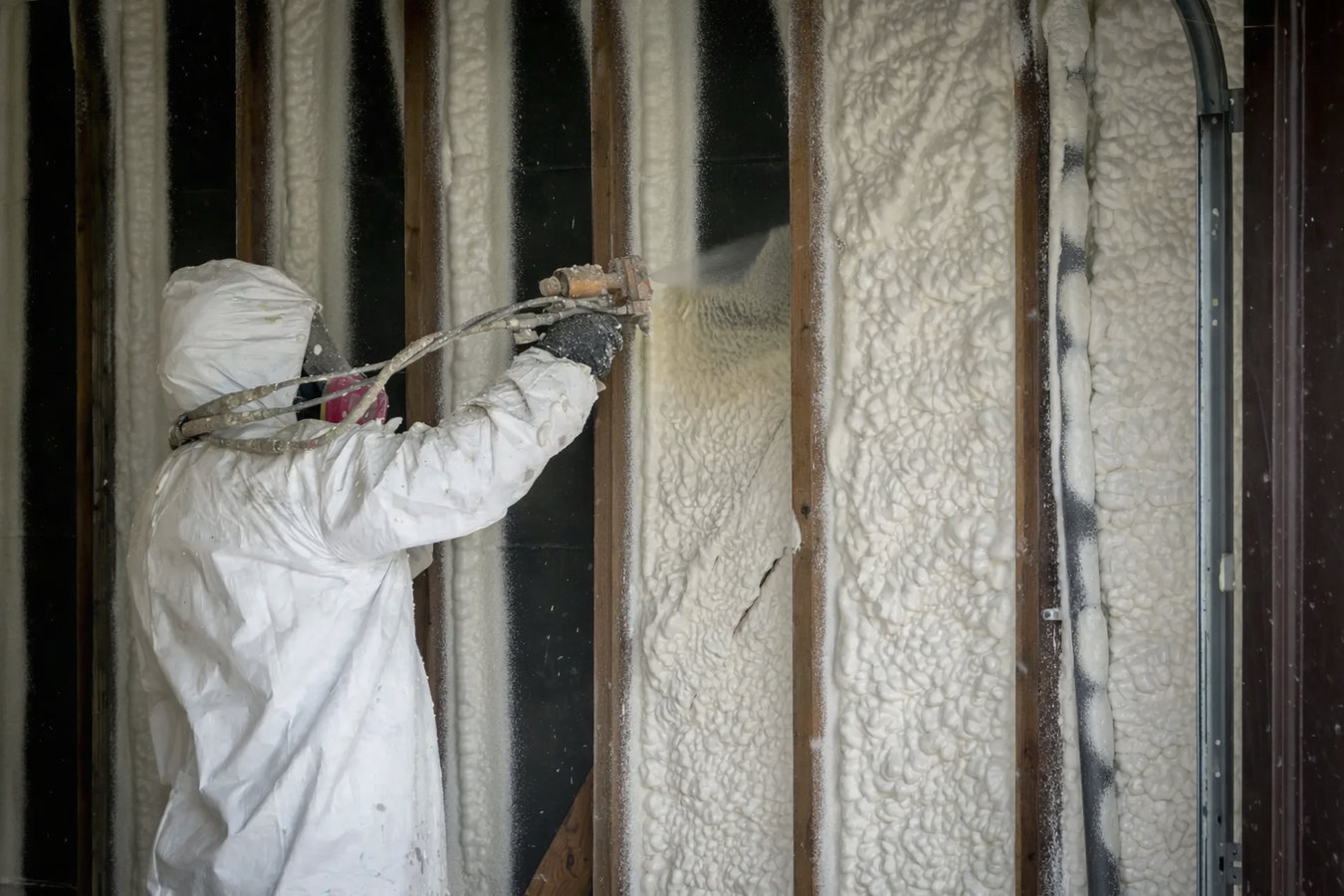
Lubbock sits on the Llano Estacado at over 3,200 feet elevation, and the unobstructed wind that comes with that flat, open Caprock landscape pushes outside air through every small gap in a home's envelope. Spray foam expands into those gaps around pipes, wiring, and framing and seals them far more completely than batt or blown-in material. For older brick ranch homes in established neighborhoods like Tech Terrace and Overton, our spray foam insulation addresses both the insulation deficit and the air infiltration problem in a single application.
Lubbock summers are long and hot, with average highs above 90 degrees Fahrenheit from June through August and intense UV exposure that drives attic temperatures well above outdoor air temperature. The single-story ranch homes that dominate Lubbock have wide, low-pitched rooflines, which means the attic covers a large ceiling area relative to the living space below. Homes built between 1950 and 1980 in this city frequently have attic insulation that has settled to a fraction of its original depth.
Brick is the dominant exterior material on Lubbock homes built from the 1950s through today, and while brick holds up well against the wind and sun, it provides almost no thermal resistance on its own. The wall cavity behind that brick is where insulation is needed, and in homes from the 1950s through 1970s, that cavity is often empty or was filled with material that has long since degraded. Injection and blown-in methods fill those cavities without requiring any work on the brick exterior.
Average wind speeds in Lubbock run around 13 miles per hour year-round, which means the city's homes are under constant pressure from outside air trying to find its way in. Electrical outlets, plumbing penetrations, and gaps along the top and bottom plates of exterior walls are the most common entry points. Sealing those pathways before or alongside insulation installation makes a measurable difference in how the home feels and how the HVAC system performs.
Blown-in insulation is the most practical option for Lubbock attics that already have some coverage but not enough depth for this climate. A crew can run a hose through the attic hatch and bring the space up to the proper depth in a few hours, without any demolition and without requiring you to leave for the day. It also handles the irregular joist spacing common in the postwar ranch homes that make up much of the city's housing stock.
With a large share of Lubbock's housing stock dating from the 1950s through the 1970s, retrofit insulation is one of the most common projects we handle in this city. Retrofit methods improve wall cavities, attic floors, and crawl space perimeters in occupied, finished homes without requiring demolition of drywall or brick exterior. Many homeowners in established neighborhoods see the biggest comfort improvement they have experienced in years after a retrofit job is done.
Lubbock sits on the Llano Estacado, a vast, flat plateau that locals call the Caprock, at an elevation of about 3,200 feet. The elevation and the lack of any natural windbreak mean the city averages wind speeds around 13 miles per hour year-round, with stronger gusts common in spring. That persistent wind does not just make it feel colder in winter. It actively pushes outside air through gaps in a home's envelope, forcing heating and cooling systems to compensate constantly. In an older Lubbock home with no air sealing and minimal wall insulation, wind-driven air infiltration can account for a significant share of energy loss even before factoring in poor attic coverage.
A substantial portion of Lubbock's housing was built between 1950 and 1979. Those homes are now 45 to 75 years old and were built under insulation standards far below what this climate demands. According to Census data for Lubbock, a large share of the housing stock falls in this age range, concentrated in established neighborhoods near downtown and Texas Tech. The dominant housing type is a single-story brick ranch on a slab, and while the brick exterior holds up well against wind and UV exposure, it provides almost no thermal resistance on its own. The wall cavities behind that brick are where the work needs to happen.
The soils under most Lubbock homes are clay-heavy, which means they swell when rain comes and contract during Lubbock's frequent dry spells. That cycle opens small gaps at slab edges, around foundation penetrations, and along wall bottom plates. Lubbock also sits in a part of the country with frequent spring hailstorms, sometimes with golf ball-size or larger hail, and winter hard freezes that can drop temperatures well below 20 degrees Fahrenheit. Homes that are properly insulated and air-sealed handle both extremes better and recover faster when a storm or freeze pushes the outdoor temperature to an extreme.
We work in Lubbock regularly and coordinate with the City of Lubbock's Development Services office when permits are needed before starting any job here. Most of our Lubbock work is on single-story brick ranch homes from the 1950s, 1960s, and 1970s, which are concentrated in neighborhoods like Tech Terrace and Overton, close to Texas Tech University. When we open an attic hatch in one of those homes, we typically find compressed fiberglass at maybe a third of the depth needed for this climate, no air sealing around the plumbing stack, and wall cavities that were never insulated at all.
The main corridors through Lubbock are Loop 289 and Marsha Sharp Freeway, which connect the older neighborhoods near downtown and the university to the newer subdivisions that have spread south and southwest over the past two decades. The contrast between a 1960s brick ranch in Tech Terrace and a newer build in south Lubbock is significant in terms of what each one needs, and we approach those jobs differently. We also serve homeowners in Midland, about 120 miles to the south on US-87, where caliche soil and similar Permian Basin heat create comparable insulation demands.
If your home is in Lubbock and you want a reference from a neighbor in your part of town who has used us, call and we will connect you. We have worked on homes across the city, from the older blocks near the Buddy Holly Center to newer construction on the south side.
Reach us by phone or the contact form and we respond within 1 business day. We will ask about your home's age, what spaces need attention, and what has been prompting your concern, so we arrive prepared for what the job likely involves.
We visit your Lubbock home, check insulation depth in the attic, look for air gaps from clay soil movement, and assess wall cavity coverage. We will confirm whether a permit is needed and what it will cost. No charge for the estimate, and you do not need to be home the full time.
The crew air-seals penetrations first, then installs the insulation material to the specified depth. Most Lubbock attic and wall jobs finish in a single day. Spray foam applications require you to stay out of the treated space for two to four hours while the foam cures.
Before we leave, we walk you through the finished work and answer any questions. We leave depth markers in the attic and provide documentation for permit inspections and for federal energy efficiency tax credit claims, giving you a clear record for resale or insurance purposes.
Lubbock homeowners call us when rooms stay hot despite a running AC, or when utility bills keep climbing through summer. We serve all of Lubbock and can usually schedule an in-home estimate within a few days.
(325) 283-1586Lubbock is a city of about 264,000 people and the largest city on the Llano Estacado, the elevated flat plateau that stretches across the Texas Panhandle and eastern New Mexico. It sits at just over 3,200 feet above sea level, making it one of the highest-elevation major cities in Texas. The region surrounding Lubbock is one of the largest cotton-producing areas in the world, and the economy in the city itself is anchored by Texas Tech University, Covenant Health, and UMC Health System. Lubbock is also the birthplace of rock and roll pioneer Buddy Holly, a connection the city celebrates with the Buddy Holly Center and a Walk of Fame on the Avenue Q corridor downtown.
Residential neighborhoods fall into two broad groups. Older in-town areas like Tech Terrace and Overton sit near Texas Tech and feature brick ranch homes dating to the 1940s through 1960s. Newer subdivisions have spread south and southwest over the past two decades, with homes built from the 1990s through today. The older neighborhoods show the wear of decades on West Texas clay soil, with foundation movement, compressed or missing insulation, and air infiltration issues that newer construction has mostly avoided. With roughly 45 percent of Lubbock housing units renter-occupied due to the university population, properties in this city often carry deferred maintenance that catches up with owners eventually.
We also serve homeowners in Midland, about two hours south on US-87, where similar clay soil conditions and West Texas heat create comparable insulation needs. To schedule an estimate in Lubbock, call us at (325) 283-1586 or use the contact form on this site.
Professional spray foam insulation that creates an airtight seal and superior thermal performance.
Learn moreAttic insulation solutions that reduce heat transfer and lower energy costs year-round.
Learn moreBlown-in insulation fills gaps and cavities for consistent coverage throughout your home.
Learn moreWhole-home insulation services tailored to improve comfort and reduce energy waste.
Learn moreSafe removal of old or damaged insulation to prepare your space for a fresh installation.
Learn moreCrawl space insulation that controls moisture and prevents heat loss through your floors.
Learn moreWall insulation that improves thermal resistance and reduces outdoor noise.
Learn moreAir sealing services that eliminate drafts and prevent conditioned air from escaping.
Learn moreBasement insulation that keeps lower levels dry, comfortable, and energy-efficient.
Learn moreClosed-cell foam provides the highest R-value per inch and a strong moisture barrier.
Learn moreOpen-cell foam offers excellent sound dampening and flexible coverage for interior spaces.
Learn moreAttic air sealing stops thermal bypass and improves the performance of your insulation.
Learn moreVapor barriers in the crawl space block ground moisture from entering your living areas.
Learn moreProfessional vapor barrier installation that protects your structure from moisture damage.
Learn moreRetrofit insulation upgrades existing homes without requiring major demolition or renovation.
Learn moreCommercial insulation services for offices, warehouses, and industrial facilities.
Learn moreServing these cities and communities.
Call Abilene Insulation Company for a free estimate on spray foam, attic, or wall insulation in Lubbock. We know these older brick ranch homes and we will tell you honestly what yours needs.